Ebook (EPUB)£125.00
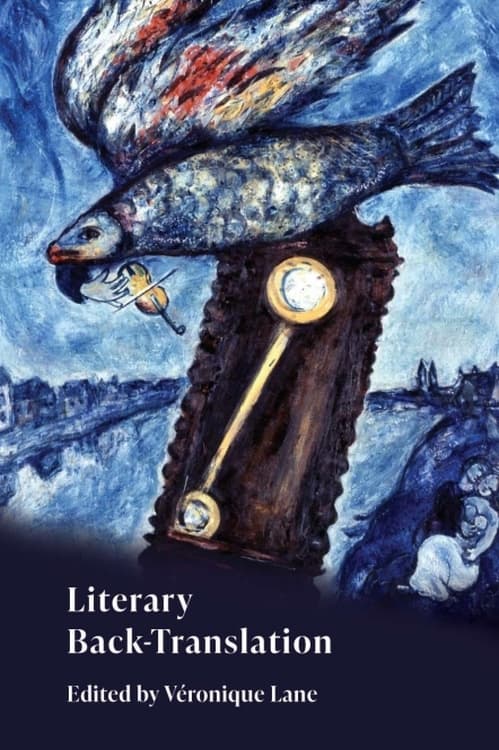
Literary Back-Translation

Our ebooks are read in the Academic Reader app. After you buy, we’ll email you how to open your ebook in it.
Description
The first book to theorise literary back-translation, distinguishing it from retranslation and indirect translation, and delineating its aesthetic, ethical, political and philosophical implications
- Offers an introduction theorizing literary back-translation, distinguishing it from retranslation and indirect translation, and delineating its aesthetic, political, ethical, and philosophical implications for authors, translators, publishers and readers
- Provides close analyses of poems and texts back-translated into a range of languages including Turkish and Chinese by a dozen authors (from Artaud, Beauvoir, Celan, Koestler and Cao Xueqín, to Benjamin and Derrida)
- Spans several methodological approaches (women and gender studies, postcolonial studies, material history, poetry, hermeneutics, AI translation, architecture, film, and photography)
- Includes a bibliography with a special section dedicated to known literary back-translations, to be collectively expanded on a companion website
Walter Benjamin famously warned against translating translations. Yet, literary back-translations are increasingly being published: whether commissioned by publishers to make celebrated translations of literary works accessible to their original audience, or sponsored by nations and feminist groups working for the cultural reappropriation of texts that first appeared in translation, back-translations are becoming more common.
This book argues that the malaise back-translations still generate are their very promise: literary back-translation transforms our conception of translation itself, through the recognition that translations are literary works in their own right, and as such also worthy of an afterlife. It thereby responds to the call of Maria Timoczko’s call for new approaches enlarging translation, conceptually as well as ideologically.
Literary back-translation reveals translation as much less teleological a process than assumed, a process that should no longer be understood as a balance of forces seeking 'restitution' – as if it were possible – but as a way to enable literary works to travel in both directions, with no preconceived trajectory.
Contents
List of Figures
Notes on Contributors
Introduction: The Challenges of Translation Theory Heightened by Literary Back-Translation
Véronique Lane
PART I. Theoretical Reflections
1. Inventive Languages: Walter Benjamin, Ernst Jandl, and the Possibility of Back-Translation
Dominik Zechner
2. Theorizing Back-Translation: From Antoine Berman on Retranslation to the Three Layers of The Monk by Lewis, Artaud, and Phillips
Véronique Lane
PART II. Back-Translation and Ideology
3. Simone de Beauvoir, Brigitte Bardot, and Back-Translation: The Trajectory of Beauvoir’s
Discourse on the ‘Eternal Feminine’
Pauline Henry-Tierney
4. Back-Translation in Chinese for the Chinese? Hong Lou Meng in the Library of Chinese
Classics and the Shanghai Foreign Language Education Press
Wang Jinbo
5. Back-translation as Self-Translation: The Strange Case of Darkness at Noon
Howard Gaskill
PART III. Back-Translation and Architecture
6. Karl: An Architectural Narrative
Peter Yeadon, Riccardo Duranti, and Lawrence Venuti
7. (Back-)Translations Make Pluriversal History
Esra Akcan
PART IV. Back-Translation and the Hermeneutics of Reading
8. Untranslatable Testimony: Paul Celan in Back-Translation
Byron Byrne-Taylor
9. Translation Without Reserve?
Jan Mieszkowski
10. Crypto-Back-Translation in Van Rooten’s Homophonic Nursery Rhymes
Alexandra Lukes
Bibliography
Index
Author
Reviews
Homing in on what may seem a marginal phenomenon, this thought-provoking book theorises literary back-translation, questions the directionality of translation, and offers case studies probing into the ideological underpinnings of all translating, including indirect translation and retranslation.
This volume on literary back-translation contributes provocatively to our understanding of what translation is and does. From the Chinese classic The Dream of the Red Chamber to the poetry and translations of Paul Celan, this collection shows readers how back-translation works.
Goes well with this book
From the same series or subject.
- Literary Back-Translation, Ebook (EPUB), £24.99
- Narrative of the Life of Sir Walter Scott, Bart., Volume II, Ebook (EPUB), £125.00
- Intermedial Authorship, Ebook (EPUB), £110.00
More in Literary Studies
View allEbook (EPUB)£110.00
Ebook (EPUB)£90.00
Ebook (EPUB)£90.00
Ebook (EPUB)£90.00