Ebook (EPUB)£19.99
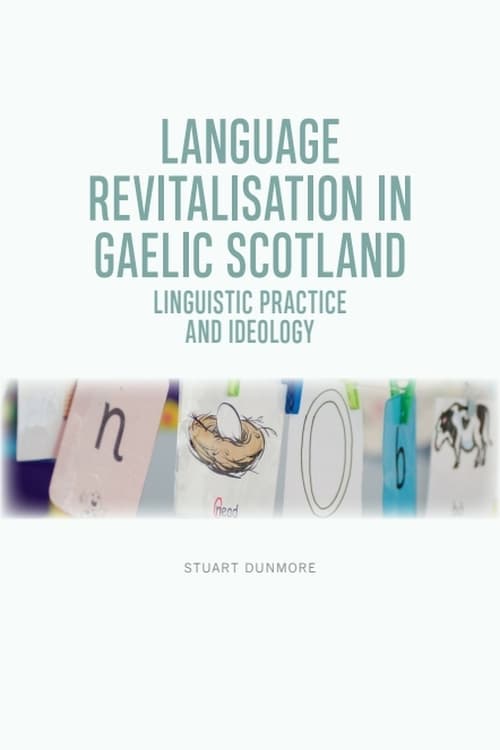
Language Revitalisation in Gaelic Scotland
Linguistic Practice and Ideology

Our ebooks are read in the Academic Reader app. After you buy, we’ll email you how to open your ebook in it.
Description
Explores the long-term outcomes of bilingual education and their implications for language revitalisation
- Surveys the history of Gaelic-medium education in Scotland and the use of Gaelic beyond the classroom
- Samples 130 participants to examine language practices and attitudes to bilingualism
- Uses an ‘ethnography of speaking’ approach to explore 46 interviewees’ beliefs and ideologies about Scottish Gaelic
- Provides the first in-depth assessment of language use and attitudinal perceptions among adults who received an immersion education in a minority language
Gaelic-medium education (GME) has been offered in Scottish primary schools since 1985. Situated within the interrelated disciplines of sociolinguistics and sociology of language, this book explores the language use and attitudinal perceptions of a sample of 130 adults who received GME at primary school. As the first students to have received a bilingual education are now in their late 20s and 30s, this volume offers a timely examination of the long-term outcomes of the system in its earliest years, and of the future prospects for Gaelic language maintenance and revitalisation in Scotland.
The book presents in-depth discussion and analysis of narratives in order to demonstrate former Gaelic-medium students’ present-day relationships to the languages they speak, offering fascinating insights into the possible reasons – historical, ideological and personal – for these relationships. This book presents the first open assessment of the outcomes of Gaelic-medium education in Scotland, and offers suggestions for individuals and policymakers seeking to revitalise languages internationally.
Contents
CH. 1. Gaelic Scotland: Bilingual life in the 21st century?
A Introduction
A 1.1. Gaelic language and culture in Scotland
A 1.2. Theoretical foundations: Language revitalisation and the role of education
A 1.3. Concluding remarks and book structure
CH. 2. Language, culture and identities: Theoretical perspectives
A 2.1. Theorising the relation of language, culture and identities
B 2.1.1. Language and ethnic identity: (Socio)linguistic, anthropological and sociological perspectives
B 2.1.2. The symbolic value of language
B 2.1.3. Essentialist perspectives on language & identity
A 2.2. Language Ideologies
A 2.3. Language Socialisation
A 2.4. Education and the role of immersion schooling
B 2.4.1. Language acquisition and immersion education
B 2.4.2. Immersion education and language attrition
B 2.4.3. Principles from overseas: Immersion revitalisation education in Europe, North America and Australasia
C 2.4.3.1. European perspectives: The Celtic world and Iberia
C 2.4.3.2. Indigenous language education in North America and Australasia
A 2.5. Concluding remarks on language, culture and immersion education
CH. 3. Exploring outcomes of Gaelic-medium education: Research design and analysis
A 3.1. GME: Past, present and prospects for revitalisation
B 3.1.1. The development of GME in Scotland 1872-1985
B 3.1.2. Expectations and experiences of GME: 1980-1990
B 3.1.3. Limitations of GME in Gaelic language revitalisation
B 3.1.4. Concluding remarks on GME as education system and research site
A 3.2. GME in its first decade: Sample design and analysis
B 3.2.1. Defining the informant universe
B 3.2.2. Questionnaire design and analysis
B 3.2.3. Ethnographic interviews in the ‘field’
A 3.3. Analytic methods
B 3.3.1. Research design: Mixed methods and data triangulation
B 3.3.2. Analysing language and culture in interaction: The ethnography of speaking
B 3.3.3. Transcription: Approach and application
B 3.3.4. Coding and analysis procedure
A 3.4. Concluding remarks
CH 4. Linguistic practice, Gaelic use and language socialisation: Findings from qualitative and quantitative analyses
A 4.1. Gaelic language practices: Discourses of (dis)use
B 4.1.1. ‘High’ reported use of Gaelic and the role of Gaelic employment
B 4.1.2. Intermediate to limited use: Family and peers?
B 4.1.3. Low use of Gaelic
B 4.1.4. Language practice I: Gaelic as a ‘secret code’
B 4.1.5. Language practice II: Code-switching and ‘informal’ Gaelic
A 4.2. Gaelic language socialisation
B 4.2.1. Gaelic language socialisation at home
B 4.2.2. Socialisation at home by one Gaelic-speaking parent
B 4.2.3. No Gaelic at home
A 4.3. GME and Gaelic socialisation
B 4.3.1. Role of GME in Gaelic language socialisation
B 4.3.2. GME: Socialisation in Gaelic culture?
B 4.3.3. Negative affect in school language socialisation
B 4.3.4. Gaelic language socialisation experiences: Some conclusions
A 4.4. Language use, GME and Gaelic socialisation: Statistical analysis
B 4.4.1. Social background variables
B 4.4.2. Reported abilities in Gaelic
B 4.4.3. Overall Gaelic language use
B 4.4.4. Family Gaelic use, socialisation and intergenerational transmission
B 4.4.5. Social use of Gaelic: Conversation, technology and (social) media
A 4.5. Concluding remarks and data triangulation
CH 5. Underlying language use: Gaelic language ideologies and attitudes
A 5.1. Ideologies of Gaelic I: Language use
B 5.1.1. Discourses of regret/‘guilt’
B 5.1.2. Intergenerational transmission and Gaelic use
B 5.1.3. ‘Judgement’ and ‘snobbery’ in the Gaelic community
B 5.1.4. Disuse, loss and ‘having’ Gaelic
B 5.1.5. ‘Opportunity’ and choice in Gaelic use
A 5.2. Ideologies of Gaelic II: Language and identities
B 5.2.1. Gaelic and personal identity
B 5.2.2. Gaels? – Gàidheil? Gaelic identity, culture and heritage
B 5.2.3. National or regional language: ‘Highlands and Islands’ identity?
B 5.2.4. Albais/Scots language: A rival linguistic identity?
B 5.2.5. Gaelic and Scottish identity: Language, nation and culture
A 5.3. Gaelic Language Attitudes
B 5.3.1. Identities and attitudes
B 5.3.2. Attitudes to Gaelic language and community
B 5.3.3. Attitudes to GME
A 5.4. Concluding remarks and triangulation of language ideologies and attitudes
CH 6. Bilingual life after school? Linguistic practice and ideologies in action
A 6.1. Language use among Gaelic-medium educated adults: Past, present and future prospects
B 6.1.1. Present Gaelic language use
B 6.1.2. Language abilities
B 6.1.3. Language socialisation
A 6.2. Language ideologies and attitudes: Factors underlying linguistic practice
B 6.2.1. Ideologies of Gaelic language use
B 6.2.2. Gaelic and sociocultural identities
B 6.2.3. Attitudes to GME
A 6.3. Conclusions: On bilingual life and the relationship of linguistic practice and ideology
Bibliography
Tables and figures
Author
Reviews
With an eminently readable style, clear structure and judiciously used signposting, Dunmore’s book fills a gap in the literature of language revitalisation. It will both inspire and motivate scholars and researchers to undertake similar studies, especially in minority-language contexts where immersion education is seen as a beacon illuminating successful revitalisation.
Having confirmed the inadequacy of school as a standalone site of language socialization, his work sounds a clarion call for innovation. In recent years, there has indeed been a growing awareness within academic and activist circles of the need for complementary strategies for language maintenance and revitalization … Dunmore's monograph will thus undoubtedly catalyse the momentum of emerging work on innovative initiatives and spaces for language socialization, and help hasten the development of further language maintenance and revitalization efforts that do indeed work.
The book will prove to be a very valuable resource for language educators, policy makers and scholars of language death and revitalisation for many years to come.
With Scottish Gaelic in decline for almost a millennium, Dunmore’s book fills a crucial gap in our understanding of the long-term social and linguistic outcomes of Gaelic medium education. It will inform policy makers and activists in Scotland and worldwide, where revitalization efforts are underway to create new speakers and domains through schooling.
Goes well with this book
From the same series or subject.
- Language Revitalisation in Gaelic Scotland, Ebook (EPUB), £23.99
- An Introduction to the English Writing System, Ebook (EPUB), £19.99
- Geolingual Studies on Urban Space, Ebook (EPUB), £125.00
More in Language & Linguistics
View allEbook (EPUB)£125.00
Ebook (EPUB)£105.00
Ebook (EPUB)£95.00
Ebook (EPUB)£90.00