Ebook (EPUB)£85.00
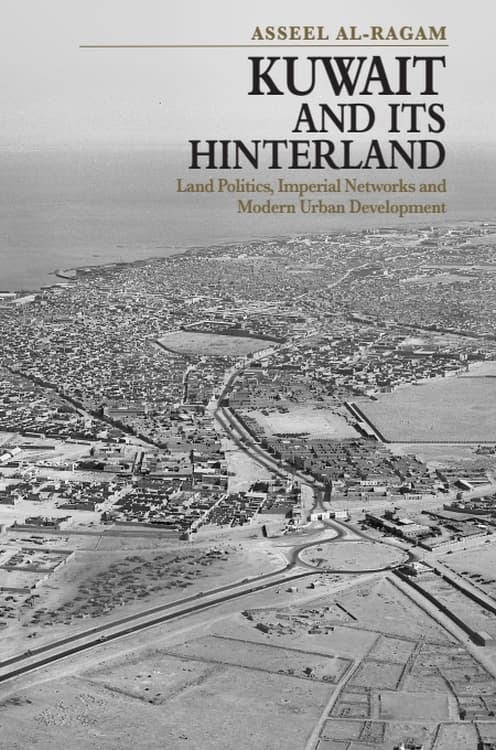
Kuwait and its Hinterland
Land Politics, Imperial Networks and Modern Urban Development

Our ebooks are read in the Academic Reader app. After you buy, we’ll email you how to open your ebook in it.
Description
This book rethinks Gulf urbanism by placing the infrastructure, planning and spatial politics of Kuwait at the centre of analysis. Offering an alternative to oil-centred narratives, it examines the impact of British indirect rule on the built environment after the signing of the 1899 Anglo-Kuwaiti Agreement. It explores how British indirect rule, regional realignments and land politics reconfigured Kuwait’s urban landscape and disrupted longstanding ties to its hinterland.
Drawing on extensive research in colonial and local archives, the book focuses on the period from 1904 to 1971, from the arrival of the first Political Agent to the British withdrawal from the Gulf. It shows how indirect rule operated through networks of intermediaries who transferred and adapted a range of administrative and planning models from across the British Empire, playing a central role in shaping urban growth while also negotiating – and sometimes containing – competing spatial futures. By situating Kuwait within imperial networks, trade routes and regional infrastructures, the book offers a new framework for understanding Gulf cities beyond oil.
Contents
1. Beyond Oil: Empire, Urbanisation, and the Making of Modern Kuwait
2. The Making of an Imperial Outpost: Kuwait's Integration into British Networks
3. ‘Brer Rabbit’ Diplomacy and the Politics of Land Use Development
4. Negotiating Influence: Social Capital and Architectural Expression of British Agency Buildings in Kuwait
5. Reordering Space: The Changing Role of Kuwait's Hinterland in Trade and Governance
6. From Improvement Trusts to Development Boards: Model Towns and the Politics of Urban Modernity
7. ‘Kuwait is a Welfare State': Spatialising Exclusion in the Welfare State
8. Revisiting Gulf Urbanism: Toward Alternative Histories and Futures
References
Author
Reviews
By treating history as an unfinished field of possibilities rather than a linear march to modernity, Al-Ragam disrupts standard oil-centred accounts of Kuwait. She reveals how urbanization actually stemmed from the interplay of British imperialism, territorial politics, local interests, and the negotiation between the city and its hinterland.
A superb book that masterfully uses urban history to unravel the uneven legacies of imperial rule, its complex connections with local intermediaries and how these relationalities reshaped modern political geographies of Kuwait and its hinterland—legitimising dominant power even as they reworked it through contestations that still resonate in urban development today and in possibilities for more just regional futures.
Goes well with this book
From the same series or subject.
- Kuwait and its Hinterland, Ebook (EPUB), £90.00
- Biography of an Ottoman Provincial Town, Ebook (EPUB), £85.00
- Demographic Anxiety in Turkey, Ebook (EPUB), £90.00
More in IMES
View allEbook (EPUB)£90.00
Ebook (EPUB)£14.99
Ebook (EPUB)£100.00
Ebook (EPUB)£95.00