Ebook (EPUB)£19.99
PoliticsEdinburgh East Asian Studies
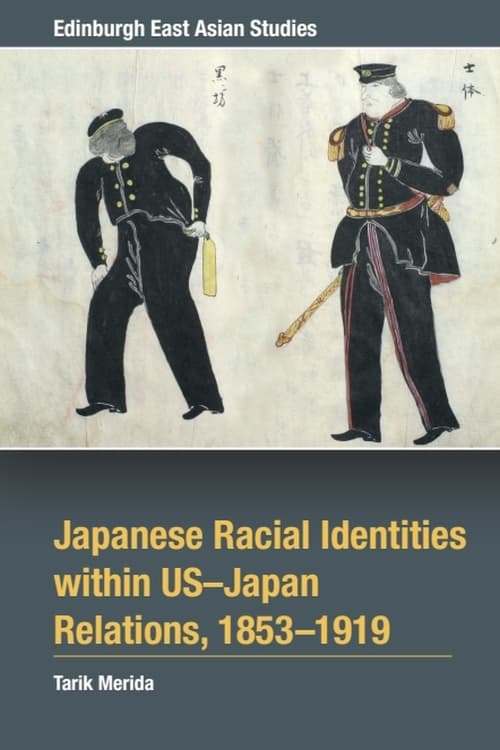
Japanese Racial Identities within U.S.-Japan Relations, 1853-1919

Our ebooks are read in the Academic Reader app. After you buy, we’ll email you how to open your ebook in it.
Description
Considers: Did race really matter? Racial ideology and political pragmatism in U.S.-Japan relations
- Breaks up the traditional dichotomic view of race relations
- Employs a new and more functional theoretical approach to understand the negotiated quality of not only the Japanese racial identity, but also of racial identities in general
- Firmly anchors Japanese history in a global framework
- Introduces a wide array of new Japanese sources particularly on the topic of Japanese and African American relations
This book retraces the process through which, at the turn of the twentieth century, the Japanese went from a racial anomaly to honorary members of the White race. It explores the interpretation of the Japanese race by Western powers, particularly the United States, during Japan’s ascension as a great power between 1853 and 1919. Forced to cope with this new element in the Far East, Western nations such as the U.S. had to device a negotiation zone in which they could accommodate the Japanese and negotiate their racial identity. In this book, Tarik Merida, presents a new tool to study this process of negotiation: the Racial Middle Ground.
Contents
Introduction: The Japanese Racial Anomaly
- On the (Ir)Relevance of Studying Race
- Subject and Scope
- Theoretical Framework – The Racial Middle Ground
- Focus and Sources
- Structure of the Book
Part I: Race in the Japanese Context: Early Modern Patterns of Differentiation and the Introduction of Race in Modern Japan
Chapter 1: Patterns of Differentiation in Early Modern Japan
- On the Existence of Race in Early Modern Japan
- Confucianism and the ‘Middle Kingdom’
- Gender and Equality in Early Modern Japan
- Hairy Barbarians: Ainu, Foreigners, and Japanese Civilisation
Chapter 2: The Translation of Race in the Meiji Period
- Introducing Modernity: The Translation of Race in the Early Meiji Period
- Adapting the Concept of Race
Part II: A Racial Middle Ground: Negotiating the Japanese Racial Identity in the Context of White Supremacy
Chapter 3: Between Two Races – The Birth of the Racial Middle Ground between Japan and the West
- Japan and the Standard of Civilisation: The Problem of Race against Civilisation
- Japan, the West, and the Racial Middle Ground
- Racial pessimism and the Survival of the Fittest
Chapter 4: Two Wars and First Successes: From the Port Arthur Massacre to the Treaty of Portsmouth
- Early Benefits of the Racial Middle Ground: The Port Arthur Massacre
- ‘Yellow’ Fears of ‘Yellow Peril’: Race and the Russo-Japanese War
- Agents of the Racial Middle Ground
Chapter 5: Further Successes and the Limits of the Racial Middle Ground – The California Crisis
- Becoming Visible: Japanese Immigration to the United States
- Theodore Roosevelt and the Japanese Racial identity
Chapter 6: African Americans and the Racial Middle Ground
- The Race at the Bottom (I): The Black Press and the California Crisis
- The Race at the Bottom (II): The Meaning of African Americans for Japan
- Early Japanese views of African Americans
- The ‘Black Problem’ or How to Sell Japanese Immigrants
- The Human Aspect of the Racial Middle Ground
Chapter 7: The End of the Racial Middle Ground
- The Crisis Goes on: The Alien Land Law of 1913
- Losing Appeal: The West, Japan, and Alternative Visions of World Orders
- Embracing Yellowness: The Appeal of Pan-Asianism
- The collapse of the Racial Middle Ground: The Paris Peace Conference
Conclusion: The Elusive Japanese Race
Author
Reviews
Tarik Merida brilliantly illustrates how modern Japan encountered the world of White supremacy and negotiated within it to create a "racial middle ground." With a sophisticated theoretical framework and detailed historical research, this provocative study overturns our common understanding of racial dichotomy to provide a new interpretation of how exceptionally complex Japanese racial identity was constructed.
A promising scholar in the early stages of his career, Merida makes a significant contribution to our understanding of nineteenth and early twentieth- century Japan’s difficult entry into the exclusive circle of world powers.
This insightful book of diplomatic and social history seeks to understand how Japan became a “racial anomaly” in its negotiations with the West [...] required reading for anyone interested in the history of racial construction in and outside of Japan.
Goes well with this book
From the same series or subject.
- Japanese Racial Identities within U.S.-Japan Relations, 1853-1919, Ebook (EPUB), £20.99
- Chinese Literature in English Sinology, Ebook (EPUB), £19.99
- Failures East and West, Ebook (EPUB), £95.00
From the same series
More in Edinburgh East Asian Studies
Ebook (EPUB)£95.00
Ebook (EPUB)£23.99
Ebook (EPUB)£25.99
Ebook (EPUB)£25.99
More in Politics
View all
Ebook (EPUB)£25.00

Ebook (EPUB)£25.00

Ebook (EPUB)£16.99

Ebook (EPUB)£24.99