Ebook (EPUB)£125.00
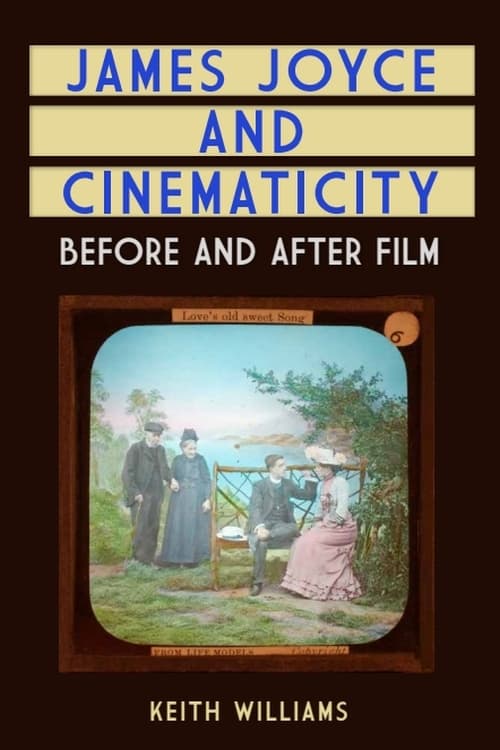
James Joyce and Cinematicity
Before and After Film

Our ebooks are read in the Academic Reader app. After you buy, we’ll email you how to open your ebook in it.
Description
Investigates how the cinematic tendency of Joyce’s writing developed from media predating film
- First comprehensive consideration of Joyce in the context of pre-filmic ‘cinematicity’.
- Research and analysis based on recent ‘media archaeology’.
- Examines the shaping of Joyce’s fiction by late-Victorian visual culture and science.
- Shows that key aspects of his literary experimentation derive from ‘forgotten’ popular cultural practices and ‘vernacular modernism’.
- Shows Joyce’s interaction with and critique of Modernity’s developing ‘media cultural imaginary’.
In this book, Keith Williams explores Victorian culture’s emergent ‘cinematicity’ as a key creative driver of Joyce’s experimental fiction, showing how Joyce’s style and themes share the cinematograph’s roots in Victorian optical entertainment and science. The book reveals Joyce’s references to optical toys, shadowgraphs, magic lanterns, panoramas, photographic analysis and film peepshows. Close analyses of his works show how his techniques elaborated and critiqued their effects on modernity’s ‘media-cultural imaginary’.
Contents
Acknowledgements List of Abbreviations List of Illustrations
Introduction
- ‘I Bar the Magic Lantern’: Dubliners and Pre-Filmic Cinematicity
- An Individuating Rhythm: Picturing Time in A Portrait of the Artist as a Young Man
- ‘Building-Vision-Machine’: Ulysses as Moving Panorama
Coda and Conclusions: Before and After Film Visiography Bibliography Index
Author
Reviews
Williams's wide range of primary and secondary research coupled with carefully nuanced readings of Joyce's language demonstrate "cinematicity" to have been a primary stylistic and structural factor in Joyce's writing and make this an authoritative statement on Joyce's use of early media. [...] Summing Up: Recommended.
Williams's wide range of primary and secondary research coupled with carefully nuanced readings of Joyce's language demonstrate "cinematicity" to have been a primary stylistic and structural factor in Joyce's writing and make this an authoritative statement on Joyce's use of early media. [...] Summing Up: Recommended.
Williams builds on recent critical developments in media archaeology and Irish screen studies to undertake substantial archival research that contextualises Dublin’s (and Ireland’s) media-cultural industry in the late Victorian and Edwardian eras [...] Read in this way, Joyce’s work proves to have been shaped by a long tradition of media-cultural visual displays that in turn allowed it to anticipate the film-making methods of Sergei Eisenstein and others.
Williams introduces a fresh take on a field much studied within Joyce studies. The work shows no weak spots as it takes the reader through the technical elements surrounding media-cultural imagery and then to how these can be read in the different works by James Joyce.
Williams introduces a fresh take on a field much studied within Joyce studies. The work shows no weak spots as it takes the reader through the technical elements surrounding media-cultural imagery and then to how these can be read in the different works by James Joyce.
Williams’s study not only constitutes a valuable contribution to Joyce studies on film and visual culture but also to research in ‘metaphoric’ visuality in general, especially in modernist literature. Providing many valuable findings and stimulating impulses, it will be a substantial reference for further scholarship.
Williams’s study not only constitutes a valuable contribution to Joyce studies on film and visual culture but also to research in ‘metaphoric’ visuality in general, especially in modernist literature. Providing many valuable findings and stimulating impulses, it will be a substantial reference for further scholarship.
Thoughtful, meticulously researched, and beautifully presented, James Joyce and Cinematicity: Before and After Film succeeds in returning Joyceans to Joyce, inviting them to encounter “the most cinematic of writers” with fresh, and freshly educated, eyes.
Williams’s book is a necessary and recommended addition to the scholarship on Joyce and visual-media culture, drawing on an impressive level of archival research which helps to better visualize the panorama of his world.
Williams’s book is a necessary and recommended addition to the scholarship on Joyce and visual-media culture, drawing on an impressive level of archival research which helps to better visualize the panorama of his world.
Williams explores the cinematicity of Joyce’s writing not only as an expression of the "Modernism" of contemporaneous film practices but also of long established media familiar to him from boyhood-shadow theatre, the kaleidoscope and stereoscope, chronophotography, panoramas and above all the magic lantern. A fascinating and thought-provoking study.
Goes well with this book
From the same series or subject.
- James Joyce and Cinematicity, Ebook (EPUB), £27.99
- Narrative of the Life of Sir Walter Scott, Bart., Volume II, Ebook (EPUB), £125.00
- Intermedial Authorship, Ebook (EPUB), £110.00
More in Literary Studies
View allEbook (EPUB)£110.00
Ebook (EPUB)£90.00
Ebook (EPUB)£90.00
Ebook (EPUB)£90.00