Ebook (EPUB)£85.00
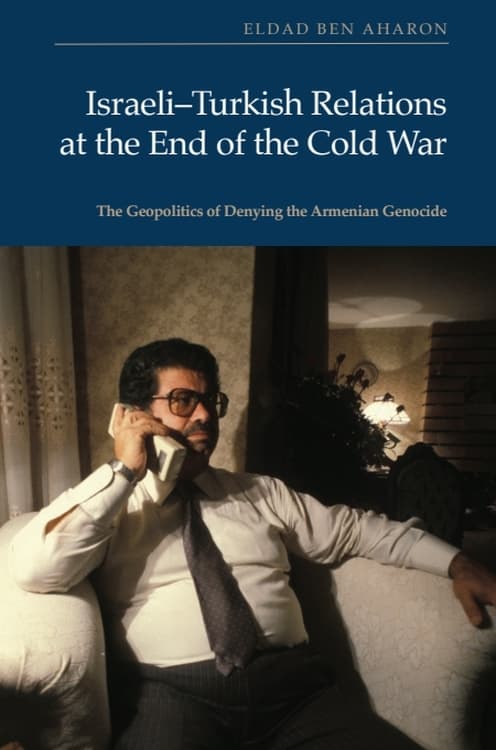
Israeli-Turkish Relations at the End of the Cold War
The Geopolitics of Denying the Armenian Genocide

Our ebooks are read in the Academic Reader app. After you buy, we’ll email you how to open your ebook in it.
Description
This book is the first to explore Israeli–Turkish relations during the 1980s, a decade often overlooked due to the absence of formal diplomatic ties. Although Turkey appeared to distance itself from Israel, this book examines how Cold War-era ontological security concerns played a key role in improving bilateral relations behind the scenes. These ontological fears included Turkey’s potential departure from NATO and its increasing efforts to combat international terrorism.
Divided into three sections, the book attributes the strengthening of Ankara–Jerusalem ties in the 1980s to the Israeli MFA’s efforts to support the denial of the 1915 Armenian Genocide in international forums. It presents case studies of four distinct episodes and examines the diplomatic manoeuvring involved.
Drawing on declassified records from Israeli and American archives, along with 30 oral interviews with Israeli, Turkish and Armenian officials, the book demonstrates that Israeli–Turkish relations during the late Cold War were shaped not only by the 1979 Islamic Revolution in Iran but also by Turkey's September 1980 military coup, Turgut Özal's leadership, Turkey's 1987 application to the European Economic Community and other key developments in Turkish politics and foreign policy. Taking an interdisciplinary approach, Eldad Ben Aharon also reveals how the 1980s marked the establishment of international norms on genocide recognition and memory, with the Holocaust emerging as the gold standard for understanding human-rights violations, while the Armenian Genocide remained contested and relegated to a weaker, secondary norm.
Contents
List of Figures
List of Abbreviations
Acknowledgements
Preface
Introduction: Israel’s Stance Regarding the Armenian Genocide
PART I. ISRAELI–TURKISH RELATIONS AT THE END OF THE COLD WAR
1. The Stakes of Losing Turkey
2. Steps towards Normalisation
PART II. RADICALISATION, SECURITY AND MEMORY
3. The War on Terror
4. The 1982 Conference
PART III. REDEFINING INTERNATIONAL NORMS IN THE 1980S: THE ARMENIAN GENOCIDE AND THE HOLOCAUST
5. The United States Holocaust Memorial Museum
6. The 1987 Armenian Genocide Bill
Conclusion: A Decade Overlooked – Israeli–Turkish Relations in the 1980s
A Note on Sources
Bibliography
Index
Author
Reviews
Eldad Ben Aharon's book provides original and important insights into the first "global war on terror" under the Reagan administration in the 1980s. Drawing upon extensive archival research and interviews, this book examines how Cold War-era ontological fears of international terrorism shaped liaison efforts amongst the U.S., Israel and Turkey. This notably led to delays in the recognition of the Armenian Genocide of 1915 for several decades. This compelling work highlights the deep interconnections between security policy and historical memory.
This ground-breaking study examines the evolution of the Israeli-Turkish alliance in the late Cold War era, laying the foundation for a decades-long partnership. It meticulously explores how Israel seized Turkey’s denial of the Armenian Genocide in the 1970s as a launching point to build trust in a country that viewed Israel’s close ties with Washington as a means to shape policy. To the surprise of many, the foundations of the alliance endured major political shifts, with the rise of Erdogan and Netanyahu. It is essential reading for anyone interested in Israel-Turkish relations and their impact on the geopolitical dynamics of the Middle East. Unequivocally, this work positions Eldad Ben-Aharon as a leading authority on Israeli-Turkish ties, just as relations between the two countries have hit rock bottom in the wake of the events of Oct 7th. In short, few can match Ben-Aharon’s ability to manoeuvre the political world of Israel, Turkey, the United States and the Middle East, crafting a compelling and very readable analysis.
Israeli-Turkish Relations at the End of the Cold War is an important contribution to understanding the role that terrorism can play in influencing diplomacy and geo-strategic realities. Eldad Ben Aharon skilfully dissects the complexities of Israeli, Turkish and American foreign policy during the 1980s as each sought to preserve good relations with one another against a backdrop of a violent campaign to avenge and gain recognition of the Armenian genocide.
In his carefully researched and argued book, Eldad Ben Aharon shows how the Israeli state’s comportment to the Armenian Genocide was the contingent outcome of regional geopolitics and Cold War contexts, ranging from the Iranian revolution in 1979 to Turkish domestic policy. Bridging multiple scales of analysis, Israeli–Turkish Relations at the End of the Cold War is a methodological tour de force on an unjustly neglected topic.
Eldad Ben Aharon’s ground-breaking study sheds new light on how Israeli diplomats, operating under Cold War pressure, worked in quiet coordination with Turkey to suppress international recognition of the Armenian Genocide. It reveals how a complex geopolitical climate, shaped by events such as the 1979 Islamic Revolution and Turkey’s 1980 military coup, prompted the Israeli Ministry of Foreign Affairs to leverage the Armenian issue as a shared concern, deepening ties with Ankara behind the scenes. Based on a rich array of primary sources, this book offers a compelling portrait of Israeli foreign policy in the final decade of the Cold War and of Middle Eastern diplomacy that paved the way for the ‘golden years’ of the 1990s.
This meticulously researched book breaks the academic silence surrounding Israeli–Turkish relations in the 1980s, offering also fresh insight into U.S. regional policies. Particularly compelling is its analysis of the contested memory of the Armenian Genocide and its entanglement with Israeli narratives of Holocaust exclusivity. A vital read for anyone seeking to understand the shifting dynamics of the modern Middle East.
Drawing on his deep knowledge on the subject and a wealth of interviews with senior diplomats, Ben Ahron has produced a deeply researched study. It provides a rich account of Israeli-Turkish relations at the end of the Cold War, with a sharp focus on the interplay between foreign and security policies, the international politics of memory, and the role of key individuals. It should be of great value to both students and scholars.
The book’s methodological architecture deserves particular attention, as it represents one of its most consequential strengths. Ben Aharon combines systematic multi-archival research with an extensive programme of 30 oral history interviews, and it is the productive tension between these two registers that gives the study much of its analytical texture.
The 1980s decade has remained under-studied. The standard accounts (Bengio, Nachmani, Liel) cluster around either the early establishment of bilateral ties or the post-1991 ‘golden years’ of the strategic partnership. Ben Aharon’s archive opens this formative decade to detailed scrutiny for the first time.
Goes well with this book
From the same series or subject.
- Israeli-Turkish Relations at the End of the Cold War, Ebook (EPUB), £24.99
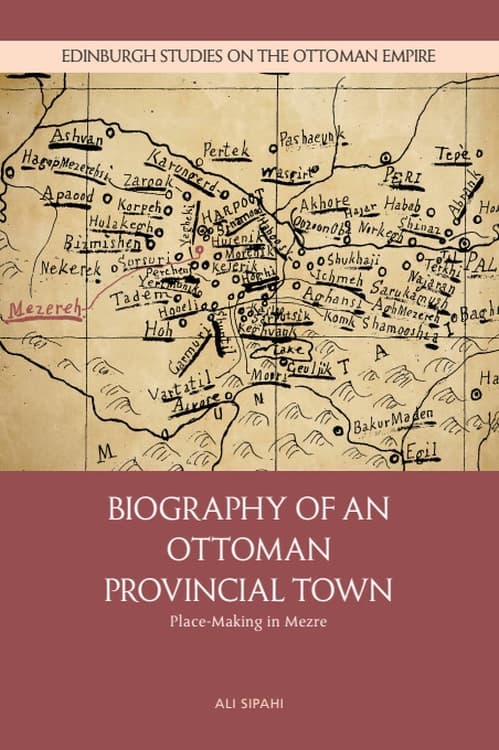
- Biography of an Ottoman Provincial Town, Ebook (EPUB), £85.00
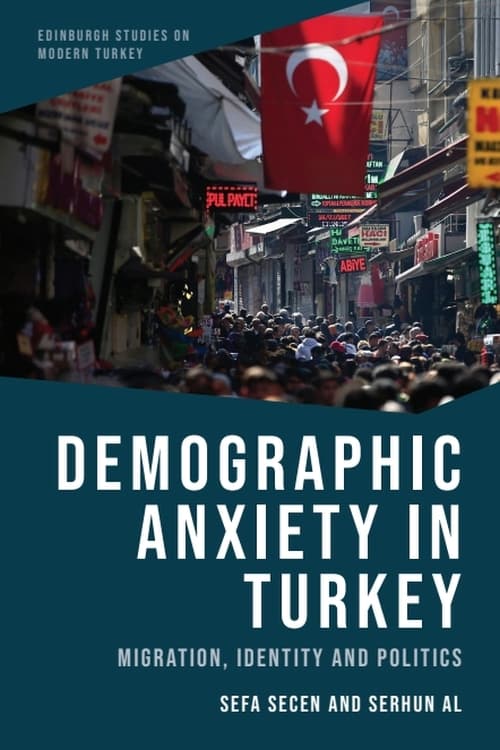
- Demographic Anxiety in Turkey, Ebook (EPUB), £90.00
More in IMES
View allEbook (EPUB)£90.00
Ebook (EPUB)£14.99
Ebook (EPUB)£100.00
Ebook (EPUB)£95.00