Ebook (EPUB)£85.00
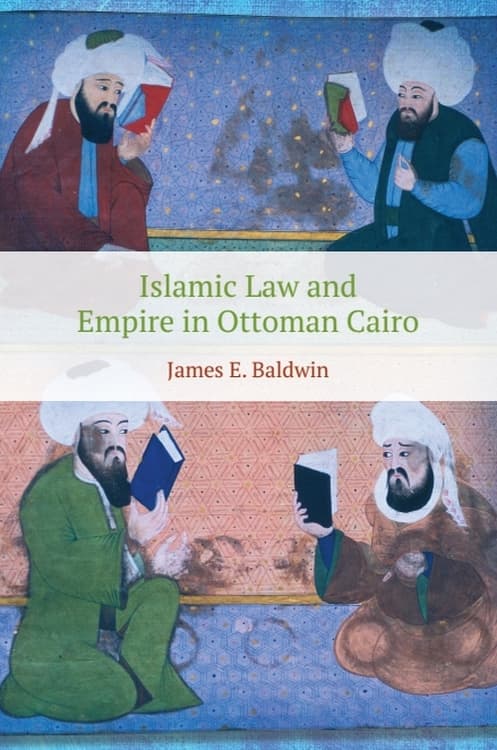
Islamic Law and Empire in Ottoman Cairo

Our ebooks are read in the Academic Reader app. After you buy, we’ll email you how to open your ebook in it.
Description
A study of Islamic law and political power in the Ottoman Empire’s richest provincial city
What did Islamic law mean in the early modern period, a world of great Muslim empires? Often portrayed as the quintessential jurists’ law, to a large extent it was developed by scholars outside the purview of the state. However, for the Sultans of the Ottoman Empire, justice was the ultimate duty of the monarch, and Islamic law was a tool of legitimation and governance. James E. Baldwin examines how the interplay of these two conceptions of Islamic law – religious scholarship and royal justice – undergirded legal practice in Cairo, the largest and richest city in the Ottoman provinces. Through detailed studies of the various formal and informal dispute resolution institutions and practices that formed the fabric of law in Ottoman Cairo, his book contributes to key questions concerning the relationship between the shari‘a and political power, the plurality of Islamic legal practice, and the nature of centre-periphery relations in the Ottoman Empire.
Key features- Offers a new interpretation of the relationship between Islamic law and political power
- Presents law as the key nexus connecting Egypt with the imperial capital Istanbul during the period of Ottoman decentralization
- Studies judicial institutions such as the governor’s Diwan and the imperial council that have received little attention in previous scholarship
- Integrates the study of legal records with an analysis of how legal practice was represented in contemporary chronicles
- Provides transcriptions and translations of a range of Ottoman legal documents
Contents
AbbreviationsAbbreviationsNote on transliteration and datesIntroduction1. A Brief Portrait of Cairo under Ottoman Rule2. Cairo’s Legal System: Institutions and Actors3. Royal Justice: The Dīvān-i Hümāyūn and the Dīwān al-ʿĀlī4. Government Authority, the Interpretation of Fiqh, and the Production of Applied Law5. The Privatization of Justice: Dispute Resolution as a Domain of Political Competition6. A Culture of Disputing: How Did Cairenes Use the Legal System?Conclusion: Ottoman Cairo’s legal system and grand narrativesAppendix: Examples of Documents Used in this StudyNotesMap: Cairo in the Eighteenth CenturyGlossarySources and Works CitedIndex
Author
Reviews
An elegantly written, well-structured, and convincing argument that will certainly stimulate scholarly discussion. This makes the book vital reading not only for scholars of Islamic law but also for historians of the Ottoman Empire.
An elegantly written, well-structured, and convincing argument that will certainly stimulate scholarly discussion. This makes the book vital reading not only for scholars of Islamic law but also for historians of the Ottoman Empire.
Drawing on a rich variety of primary sources in both Arabic and Ottoman Turkish, Baldwin provides a very valuable reinterpretation of law and politics in Ottoman Egypt. In particular, he convincingly challenges the image of the autonomous judge as the pivot of Ottoman legal system, and instead argues that the judge should be placed within a complex network of legal institutions with overlapping jurisdictions. As a result a very rich and detailed picture of law and politics emerges, a picture that illustrates the relationship between imperial center and provincial societies, between shari‘a and state power, and between sultan and litigants. This is a very significant contribution to Islamic legal studies, Ottoman history and scholarship on early-modern Egypt.'
Goes well with this book
From the same series or subject.
- Islamic Law and Empire in Ottoman Cairo, Ebook (EPUB), £25.99
- Biography of an Ottoman Provincial Town, Ebook (EPUB), £85.00
- Demographic Anxiety in Turkey, Ebook (EPUB), £90.00
More in IMES
View allEbook (EPUB)£90.00

Ebook (EPUB)£14.99
Ebook (EPUB)£100.00

Ebook (EPUB)£95.00