Ebook (EPUB)£95.00
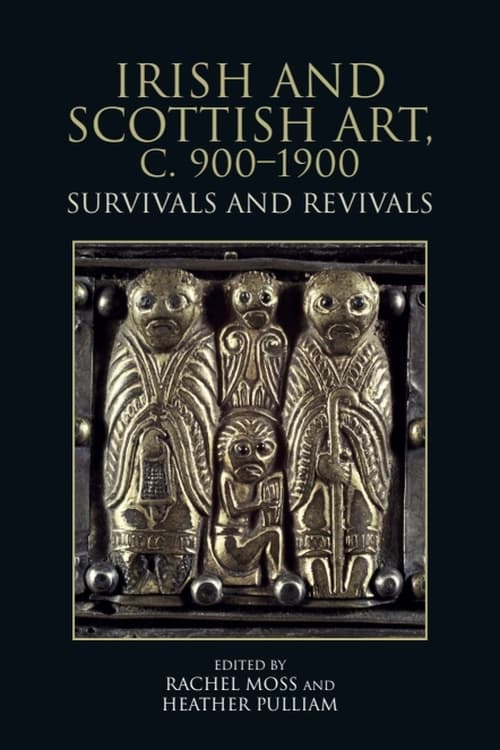
Irish and Scottish Art, c. 900-1900
Survivals and Revivals

Our ebooks are read in the Academic Reader app. After you buy, we’ll email you how to open your ebook in it.
Description
Winner of 'The Multi-Authored Book Award' from the Historians of British Art Prize Committee
Studies the shared artistic traditions of Scotland and Ireland, from the medieval to the modern
- An interdisciplinary synthesis on a large, significant corpus of Scottish and Irish material culture (c.900-1900), traditionally overlooked due to focus on the earlier period (c.700–900)
- Instead of a singular Celtic Revival c.1830–1930, argues for a series of revivals and renewals, stretching across a millennium
- Examines the extended biographies of groups of objects and monuments revealing patterns of change consistent across the Gaelic world
- Delineates the role of nationalism, identity and authenticity as well as connoisseurship, heritage and antiquarianism in shaping previous art historical narratives and framing of this material
- Provides the first overview of shared traditions of hereditary and community keepership; additionally, considers how this tradition impacts contemporary conservation and display of these objects
- Delineates the significant role played by replicas and interventions (repair, alteration, addition) to artworks
As evidenced by the famed Book of Kells and monumental high crosses, Scotland and Ireland have long shared a distinctive artistic tradition. The story of how this tradition developed and flourished for another millennium through survival, adaptation and revival is less well known. Some works were preserved and repaired as relics, objects of devotion believed to hold magical powers.
Respect for the past saw the creation of new artefacts through the assemblage of older parts, or the creation of fakes and facsimiles. Meanings and values attached to these objects, and to places with strong early Christian associations, changed over time but their ‘Celtic’ and/or ‘Gaelic’ character has remained to the forefront of Scottish and Irish national expression.
Exploring themes of authenticity, imitation, heritage, conservation and nationalism, these interdisciplinary essays draw attention to a variety of understudied artworks and illustrate the enduring link that exists between Scottish and Irish cultures.
Contents
Acknowledgements
List of Contributors
List of Illustrations
Abbreviations
Introduction: Introduction: Relics, Revivals and Replicas in the Gaelic World - Rachel Moss and Heather Pulliam
Arts, Belief and Politics in Scotland and Ireland c. 500 – c. 1900 - Rachel Moss and Heather Pulliam
Part 1 New Landscapes: Monuments, Place and Permanence
Remaking the Gaelic Christian Landscape: Devotion, Iconoclasm and Tourism in Post-Reformation Ireland and Scotland - Rachel Moss
Insular Motifs and Traditions in Late Medieval Monumental Sculpture in the West Highlands and Islands - David Caldwell
The Tuam Crosses: A Legacy of Fragmentation and Dislocation - Ana Dolan
Part 2 Heirlooms and Heritage: Broken, Mended and Gifted
On Insular Bells and Shrines - Cormac Bourke
Remaking and Remembering the Monymusk Reliquary - Alice Blackwell
Irish Medieval Book-shrines: Repairs, Recycling and Restorations - Paul Mullarkey
Early Irish and Scottish Crosiers in the Later and Post-medieval Periods: Relics and Reliquaries - Griffin Murray
Late Medieval Metalworking in Fifteenth- and Sixteenth-century Gaelic Ireland and Scotland - Raghnall Ó Floinn
A Leg (or Two) to Stand on: Rethinking the Drinking Horn - Carol Neuman de Vegvar
Part 3: Imitation and Authenticity: Claiming the Past
Scribe and Limner in the Late-medieval Gaelic Manuscript Tradition - Pádraig Ó Macháin
A Basis for Celtic Revival Art in Scotland - Murdo Macdonald
Reproduction of the Hunterston Brooch in Scotland and Ireland, c. 1850–1900 - Tara Kelly
Druids and Mistletoe: A Case Study of Authenticity and Identity in the Celtic Revival - Heather Pulliam
Postscript
Changing Perceptions and the Future of Insular and Gaelic and Celtic Material Culture - Rachel Moss and Heather Pulliam
Glossary of terms
Biblipgraphy
Index
Reviews
The features of Insular art produced in Ireland and Scotland are broadly recognisable: monumental ring crosses, energetic animal ornament, interlace, distinctive end elegant lettering. Their moments of glory were around the 9th and late 19th centuries with an efflorescence in the late middle ages too.
What happened in between those high moments and caused the revivals? This richly developed book provides a nuanced explanation of the political, religious and social factors which sustained Insular art not only as a distinct style but also through a range of revered objects. It demonstrates how these artefacts perpetuated belief, opinion, ancient knowledge, social status and national identity.
This greatly anticipated volume examines, among other concepts, the perceptions of authenticity in the early medieval Irish and Scottish material and more recent ‘Celtic’ artefacts and is to be welcomed. The entrenched reverence for the past continues to influence contemporary views that may not consider the life or lives of the objects under examination. It is refreshing to experience this compilation of contributors who give sight to new understandings.
A most informative, exciting and, indeed, provocative book.
Goes well with this book
From the same series or subject.
- Irish and Scottish Art, c. 900-1900, Ebook (EPUB), £24.99
- Presbyterian Strathspey in the Jacobite Era, Ebook (EPUB), £95.00
- The Estate and the Country House in Scotland, circa 1700, Ebook (EPUB), £95.00
More in Scottish Studies
View allEbook (EPUB)£95.00
Ebook (EPUB)£95.00
Ebook (EPUB)£95.00