Paperback£19.99
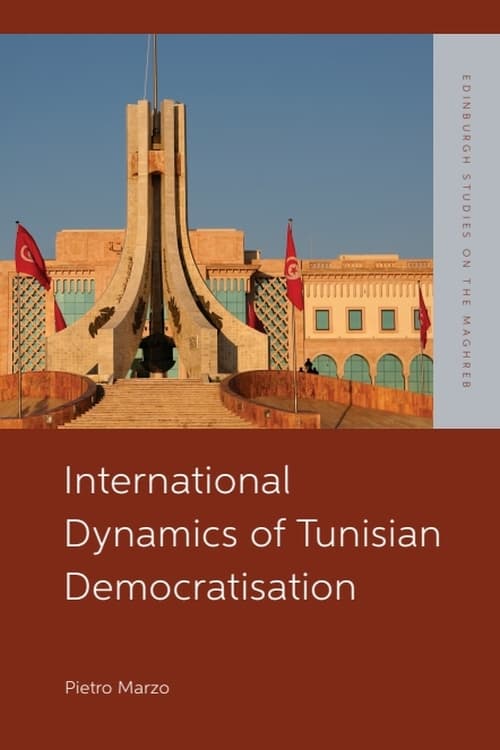
IMESEdinburgh Studies on the Maghreb
International Dynamics of Tunisian Democratisation

Our ebooks are read in the Academic Reader app. After you buy, we’ll email you how to open your ebook in it.
Description
Analyses the democratic transition in Tunisia by exploring its international dimension
- Challenges the idea that democracy promotion in the Middle East and North Africa (MENA) always produces meaningless and counterproductive results
- Investigates the strengths, flaws and unintended consequences of internationally assisted democracy promotion in Tunisian democratization
- Explains how geopolitical factors are important for understanding processes of democratisation and authoritarianism that Tunisia has experienced in recent decades
This book focuses on international dynamics and global factors that surrounded Ben Ali’s regime breakdown and the subsequent democratisation process in Tunisia. Relying on extensive fieldwork, the research explores the interplay between international and national actors and presents two main arguments. First, it shows that although Western states officially remained allies of Ben Ali until the end of his regime (1987-2011), democracy promoters and international actors in part supported debate and interactions among Tunisian individuals and groups with critical views of his rule and policies. These activities fostered the emergence of alternative discourses and potential coalitions, eventually weakening the internal and external legitimacy of the Ben Ali regime. Second, the book argues that between 2011 and 2021 international assistance helped Tunisian transitional elites to build a procedural democracy. Yet foreign assistance and democracy promotion devoted less effort to boost more substantive aspects of democratisation, indirectly contributing to the rise of popular disillusion with democratic governance.
Contents
Acknowledgements
List of Abbreviations and Acronyms
Introduction
1. The International Dimension of Democratisation
2. A Historical Analysis of Tunisia’s International Context
3. The United States and Tunisian Democratisation
4. Germany and Tunisian Democratisation
5. Achievements, Flaws and Unintended Consequences of Democracy Promotion
6. The European Union and Tunisian Democratisation
7. The Policy of International Financial Institutions in Tunisia
Conclusion
Bibliography
Author
Goes well with this book
From the same series or subject.
- International Dynamics of Tunisian Democratisation, Ebook (EPUB), £90.00
- Contemporary Islamist Opposition in Morocco, Paperback, £19.99
- Daesh Ideology and Women’s Rights in the Maghreb, Ebook (EPUB), £24.99
From the same series
More in Edinburgh Studies on the Maghreb
Ebook (EPUB)£24.99
Ebook (EPUB)£24.99
Ebook (EPUB)£24.99
More in IMES
View all
Ebook (EPUB)£85.00
Ebook (EPUB)£90.00

Ebook (EPUB)£14.99

Ebook (EPUB)£100.00

Ebook (EPUB)£95.00