Ebook (EPUB)£95.00
Ancient History & Classical StudiesEdinburgh Byzantine Studies
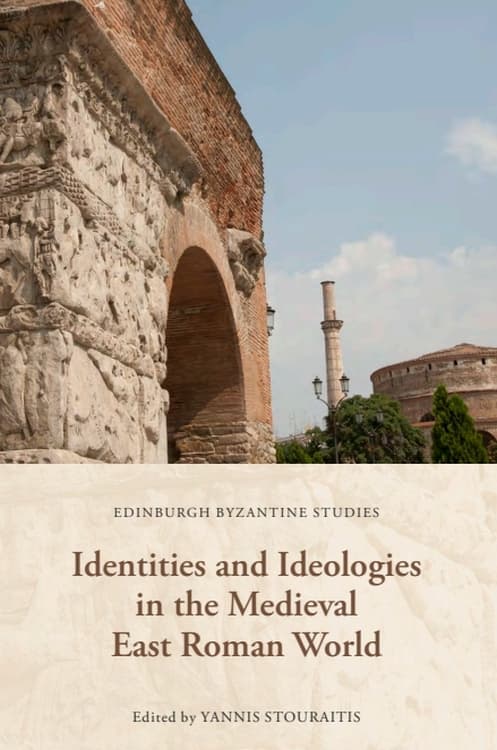
Identities and Ideologies in the Medieval East Roman World
Open access
Open access under CC-BY-NC-ND 4.0
Description
Examining ideas, beliefs and practices of identification in the medieval East Roman world
- Approaches ideology and identity in the Byzantine world from different perspectives, top-down, bottom-up, and outside-in, and from various disciplinary perspectives including historical, literary, art-historical and archaeological
- Explores what makes discourses ideological by giving them a central function in the promotion of power relations and interests on the macro-level of society as well as on the micro-level of certain social groups
- Explores the interrelation between dominant imperial ideology and collective identification
- Scrutinizes various kinds of identification, local-regional, religious, gender, class, ethno-cultural and regnal-political
- Contributors include Leslie Brubaker, Kostis Smyrlis, Alicia Simpson and Dionysios Sthathakopoulos
This collection offers new insights into ideology and identity in the Byzantine world. The range of international contributors explore the content and role of various ideological discourses in shaping the relationship between the imperial centre and the provinces. Crucially, they examine various kinds of collective identifications and visions of community in the broader Byzantine world within and beyond the political boundaries of the empire.
This interdisciplinary collection includes historical, literary, art-historical and archaeological as well as cross-cultural perspectives along with the exploration of ideas and identifications in cultures on the empire’s periphery.
Contents
List of IllustrationsList of AbbreviationsNotes on Contributors
IntroductionThe Ideology of Identities and the Identity of IdeologiesJohn Haldon and Yannis Stouraitis
PART I: Top-Down and Bottom-Up Approaches
PART II: Centre and Periphery
Index
Author
Reviews
These sixteen articles represent a fresh look at history of Byzantium, where Constantinople and its Emperors only play a marginal role. The focus is instead on provincial elites (including those in the border lands), members of the literate middle class, city dwellers, rural families, and women. What ideologies did they subscribe to? How did they articulate their social, political and ethnic identities? And what sense of community cohesion did they thereby generate? This volume goes a long way to address these questions, contributing to a bottom-up perspective on medieval society in the eastern Mediterranean.
Goes well with this book
From the same series or subject.
From the same series
More in Edinburgh Byzantine Studies
Ebook (EPUB)£24.99
Ebook (EPUB)£39.99
Ebook (EPUB)£20.99
Ebook (EPUB)£27.99
Hardback£100.00
Hardback£95.00
More in Ancient History & Classical Studies
View all
Ebook (EPUB)£85.00
Ebook (EPUB)£100.00
Ebook (EPUB)£95.00
Ebook (EPUB)£135.00
Ebook (EPUB)£150.00