Hardback£95.00
IMESEncounters in the Middle East and Asia
Human-Animal Relations and the Hunt in Korea and Northeast Asia

Our ebooks are read in the Academic Reader app. After you buy, we’ll email you how to open your ebook in it.
Description
Studies how the hunt, animals and regional dynamics informed local cultural practices on the Korean peninsula
- Draws out the significance of the peninsula in regional and Eurasian history through the perspective of animals and the hunt; themes scholarship has overlooked
- Reframes the struggle between a kingship and a powerful bureaucracy competing for authority over an expanding state in the shifting geopolitics of Northeast Asia at the advent of the Little Ice Age
- Explores political and military contacts across Northeast Asia through Korean encounters with Yuan Mongols, Ming Chinese, Jurchen tribes, and Japanese on Tsushima and pirates along the coasts, all in the context of hunts, hunting grounds and wild beasts
- Rereads the primary sources with an eye on animals and the hunt, including neglected sources such as a 15th-century manuscript on falcons and falconry
- Draws upon secondary sources across the fields of animal studies, zoology, geography, biology and more, including forays into the larger topic of human–animal affairs and environmental history
- Studies the circulation of ideas and intellectual contacts across the region, such as the cultural flows of Buddhism, Neo-Confucianism, and folk and shaman beliefs related to animals and hunting
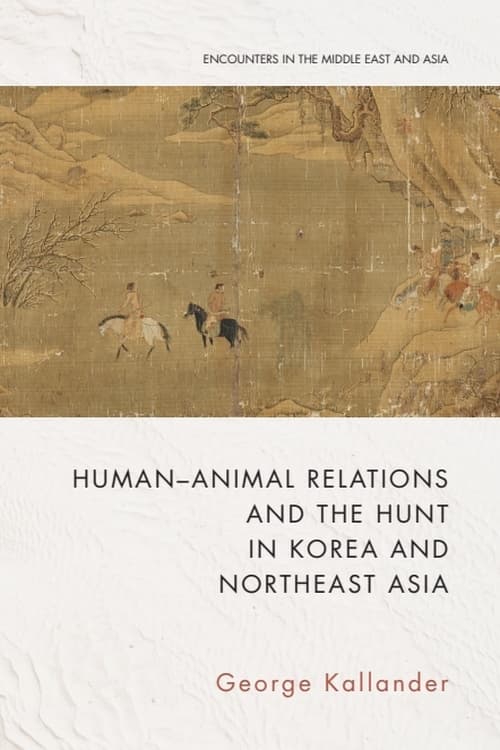
This book focuses on animals and hunting in Korea from the 1270s until 1506, situating the Korean peninsula in relation to the neighbouring Mongol Empire and Ming dynasty China. During this period, Korean statesmen expanded their influence over people and the environment, and human–animal relations became increasingly significant to politics, national security and elite identities. Animals were used in ritual sacrifices, submitted as tax tribute, exchanged in regional trade and, most significantly, hunted.
George Kallander explores how vociferous debates between scholars and kings about hunting, animals and proper conduct stemmed from tensions surrounding the Korean peninsula’s contacts with regional and Eurasian empires. He depicts how a multiplicity of cultural references – Sinic, Korean, North East Asian and steppeland – co-existed and served as a battleground for defining politics, society and ritual. Animals, rather than being mere resources, were a site over which power struggles were waged. Drawing upon sources from fields including animal studies, zoology, geography and biology, this book sharpens our understanding of how people and animals intersected and sheds new light on the flow of ideas and cross-regional encounters of premodern and early modern societies.
Contents
List of Illustrations List of Kings
Introduction: Why Animals and the Hunt?
- Wild Beasts on a Premodern Peninsula
- Koryŏ and the Empire of the Hunt
- Growth, Transformation and Challenge in the Late-14th and Early 15th Centuries
- Confucian Beasts: Human–Animal Relations in Early Chosŏn
- Stalking the Forests: The Military on the Chase in the Mid-15th Century
- Challenges to the Royal Military Kangmu Hunt
- Public Animals, Private Hunts and Royal Authority in the 15th Century
- Release the Falcons: A King in a Confucian Court
- Taming Wild Animals and Beastly Monarchs
Conclusion: Legacies of the Hunt in Politics, Society and Empire
Bibliography Index
Author
Reviews
This innovative study of premodern Korea explores vital issues like the nature of rulership, foreign relations, and the state’s efforts to extract human and animal resources throughout the realm. It is an inspired—and inspiring—illustration of how to integrate Korea into the broader span of eastern Eurasian history.
[A] formidable contribution to the young but growing fields of Korean animal studies and environmental history [...] Kallander’s account offers compelling insights to many different kinds of readers, from those interested in Korea’s environmental history and the fate of its [...] wild animals, to scholars interested in further evidence of Mongol legacies in premodern Korea or the politics and ideology of the Koryŏ- Chosŏn transition. Such a rich and thoroughly accessible volume shows the exciting possibilities that come from examining Korean history through a multispecies lens.
Kallander’s most recent addition to the field of premodern Korean history is a valuable foray into the history of human–animal relations on the peninsula.
Kallander presents a society that was in awe of the wilderness, and the hunted creatures were woven into the fabric of the kingdoms’ traditions, stories, and clothing. The book dives into this world by use of government records from the Koryŏ and Chosŏn courts but is augmented by use of art and maps showing the locations and displays of creatures. Kallander’s argument is wide-ranging and introduces aspects of economics, politics, philosophy, international relations, masculinity, climate change, state rituals, and uxorilocal marriage customs.
Goes well with this book
From the same series or subject.
- Human-Animal Relations and the Hunt in Korea and Northeast Asia, Ebook (EPUB), £24.99
- Climate Changes, Plagues, and Wars, Hardback, £95.00
- Biography of an Ottoman Provincial Town, Ebook (EPUB), £85.00
From the same series
More in Encounters in the Middle East and Asia
More in IMES
View allEbook (EPUB)£85.00
Ebook (EPUB)£90.00
Ebook (EPUB)£14.99
Ebook (EPUB)£100.00
Ebook (EPUB)£95.00