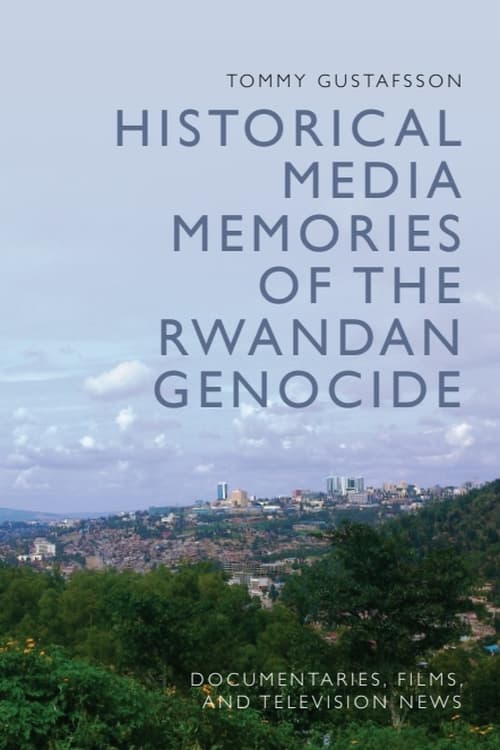
Historical Media Memories of the Rwandan Genocide
Documentaries, Films, and Television News
Open access under CC-BY-NC-ND 4.0
Description
- The first study that includes all film and television productions on the Rwandan genocide, approximately 200 productions made in 39 countries between 1994 and 2021
- Introduces the term emblematic images, that is, images that were created during the television news reporting of the genocide in 1994, and then used and re-created in film and documentaries
- Introduces a new theoretical perspective in the fields of Film and History, and Film and Genocide that, for the first time, take into consideration a transnational approach and how this is connected to changes and repetitions over time
- This is the first study that takes a comprehensive on how the Rwandan film and television industry have handled the genocide against the Tutsis
- The book is based on extensive research, including several longer research trips to Rwanda, and it includes a great variety of source material, such as international film reviews, articles, debates, books, extratextual production material, and interviews as well as teaching guides, official Rwandan governmental reports, and UN reports
The Rwandan genocide is the second most audio-visually recreated genocide after the Holocaust, with approximately 200 films and documentaries produced in 39 countries between 1994 and 2021.
Historical Media Memories of the Rwandan Genocide studies the construction, the development, and the recreation of the transnational historical media memory of the genocide against the Tutsis in Rwanda in 1994.
This is the first comprehensive work that traces the international media image and the creation of historical memories of the Rwandan genocide, starting with the day to day television news reporting in 1994, and continuing with analyzes of how the genocide has been used and recreated in film and documentaries on a global level as well on a national level, where Rwanda, as a nation, creates its own images of the genocide in film and television production in order to support a new national identity.
Contents
List of Illustrations
Acknowledgments
1. Introduction: Historical Media Memories of the Rwandan Genocide
Part One: The Apocalypse, April to July 1994
2. Swedish Television News in 1994
Part Two: The Creation of a Transnational Historical Media Memory of the Rwandan Genocide, 1994–2005
3. The Creation of a Transnational Historical Media Memory of the Rwandan Genocide in the International Production of Television Documentaries, 1994–2003
4. The Creation of a Global Public Consciousness, 2004–2005
5. Telling the Truth: Documentary Films and Public Consciousness
Part Three: To Maintain a Historical Media Memory on a Global Level, 2004–2021
6. The Difficulties to Maintain a Historical Media Memory in Feature Films
7. Emblematic Images and the Maintenance of a Historical Media Memory in Documentaries
8. Women, AIDS, and Rape
9. Reconciliation and Gacaca Documentaries
10. Historical Revisionism and Historical Negationism
Part Four: The Use of Historical Media Memories in Rwanda, 2001–2021
11. The Genocide against the Tutsi in Rwandan Film and Television
Notes
Bibliography
Filmography of the Rwandan Genocide
Index
Author
Reviews
Gustafsson’s account of how the media have represented the 1994 genocide against the Tutsis of Rwanda is a tour de force. Rigorous, convincing, and compassionate, Historical Media Memories of the Rwandan Genocide is quite extraordinary. It truly deserves a very wide audience.
Gustafsson’s account of how the media have represented the 1994 genocide against the Tutsis of Rwanda is a tour de force. Rigorous, convincing, and compassionate, Historical Media Memories of the Rwandan Genocide is quite extraordinary. It truly deserves a very wide audience.
Goes well with this book
From the same series or subject.

More in Film Studies
View all
Ebook (EPUB)£90.00
Ebook (PDF)£19.99
Ebook (EPUB)£95.00
£24.99