Ebook (EPUB)£19.99
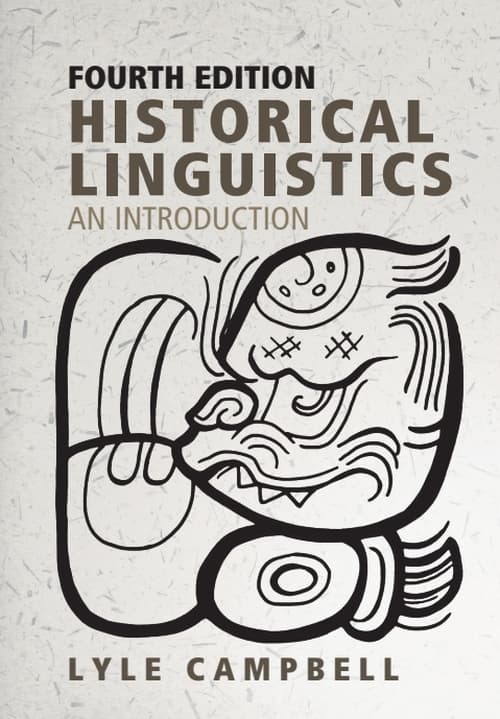
Historical Linguistics
An Introduction

Our ebooks are read in the Academic Reader app. After you buy, we’ll email you how to open your ebook in it.
Description
An accessible, hands-on introduction to historical linguistics
The fourth edition features:
- A larger page format and refreshed layout for a more user-friendly experience
- 16 restructured and revised chapters, including new examples and exercises and new coverage on areas such as lexical and semantic change, historical corpus linguistics, historical sociolinguistics, and endangered languages and linguistic change
- Practical exercises and a full bibliography enable students to grasp and grow their understanding of historical linguistics
- Examples drawn from more familiar languages such as English, French, German and Spanish and from numerous non-Indo-European languages from all over the world present an international focus
- An electronic Instructor’s Manual is available to lecturers direct from EUP to support teaching - email marketing to get your copy
- A new preface which includes a guide to using the book and presents outline plans of possible organization for historical linguistics courses of different lengths
- Over 90 tables, figures and maps to clearly demonstrate key concepts, data and ideas
Are you interested in understanding language change? Do you want to know about the origins of words? Are you searching for explanations for what is unusual or weird in the languages you speak?
Lyle Campbell presents an accessible, hands-on introduction to historical linguistics – one that does not just talk about the topics, but through practical exercises and examples shows you how to apply the procedures, how to think about the issues and, in general, how to do what historical linguists do.
This 4th edition covers a wide range of topics including areal linguistics, linguistic prehistory, distant genetic relationships, language contact, lexical and semantic change, sociolinguistics and language change, quantitative and corpus research methods. Examples are drawn from a wide range of languages.
With its lucid and engaging style, expert guidance and comprehensive coverage, this book is ideal for students coming to historical linguistics for the first time.
Contents
List of Tables; List of Figures and Maps; Preface; Acknowledgements; Phonetic Symbols and Conventions; Phonetic Symbols ChartChapter 1: Introduction 1.1 Introduction1.2 What is Historical Linguistics About? 1.3 Kinds of Linguistic Changes: An English Example 1.4 Exercises Chapter 2: Sound Change 2.1 Introduction 2.2 Kinds of Sound Change 2.3 Non-phonemic (Allophonic) Changes 2.4 Phonemic Changes 2.5 Sporadic Changes 2.6 General Kinds of Sound Changes 2.7 Kinds of Common Sound Changes 2.8 Relative Chronology 2.9 Chain Shifts Chapter 3: Loanwords (Borrowing)3.1 Introduction 3.2 What is a Loanword? 3.3 How do Words get Borrowed?3.4 How do Words get Borrowed?3.5 How do we Identify Loanwords and Determine the Direction of Borrowing? 3.6 Loans as Clues to Linguistic Changes in the Past 3.7 Calques (Loan Translations, Semantic Loans) 3.8 Emphatic Foreignization3.9 Exercises Chapter 4: Analogical Change 4.1 Introduction 4.2 Proportional Analogy 4.3 Analogical Levelling 4.4 Analogical Extension 4.5 The Relationship between Analogy and Sound Change 4.6 Immediate and Non-immediate Analogical Models 4.7 Other Kinds of Analogy 4.8 Exercises Chapter 5: Lexical Change5.1 Introduction5.2 Lexical Change and New Words 5.3 Obsolescence and Loss of Vocabulary5.4 Suppletion5.5 Exercises 6 Chapter 6. Semantic change6.1 Introduction 6.2 Traditional Notions of Semantic Change6.3 Attempts to Explain Semantic Change 6.4 Exercises Chapter 7: The Comparative Method and Linguistic Reconstruction 7.1 Introduction7.2 The Comparative Method Up Close and Personal 7.3 A Case Study 7.4 Indo-European and the Regularity of Sound Change 7.5 Basic Assumptions of the Comparative Method 7.6 How Realistic are Reconstructed Proto-languages?7.7 Temporal Limitations to the Comparative Method 7.9 Exercises Chapter 8: Internal Reconstruction8.1 Introduction 8.2 Internal Reconstruction Illustrated 8.3 Relative Chronology 8.4 The Limitations of Internal Reconstruction 8.5 Internal Reconstruction and the Comparative Method 8.6 Exercises Chapter 9: Linguistic Classification 9.1 Introduction 9.2 The World’s Language Families 9.3 Terminology9.4 How to Draw Family Trees: Subgrouping 9.5 Models of Language Change 9.6 Sociolinguistics and Language Change 9.7 Exercises 185Chapter 10: Language Contact 10.1 Introduction 10.2 What Can be Borrowed besides just Words?10.3 Areal Linguistics 10.4 Pidgins and Creoles 10.5 Mixed Languages 10.6 Endangered Languages and Linguistic Change Chapter 11: Change in Syntactic and Morphology 11.1 Introduction 11.2 Mechanisms of Syntactic Change 11.3 Generative Approaches 11.4 Grammaticalization11.5 Reconstruction of Morphology and Syntax11.6 Exercises Chapter 12: Explanation of Language Change12.1 Introduction 12.2 Early Theories 12.3 Internal and External Causes 12.4 Interaction of Causal Factors 12.5 One Form, One Meaning12.5 Explanation and Prediction Chapter 13: Distant Genetic Relationship13.1 Introduction 13.2 Lexical Comparison 13.3 Sound Correspondences 13.4 Grammatical Evidence 13.5 Borrowing 13.6 Semantic Constraints 13.7 Onomatopoeia 13.8 Nursery Forms 13.9 Short Forms and Unmatched Segments 13.10 Chance Similarities 13.11 Sound–Meaning Isomorphism 13.12 Only Linguistic Evidence 13.13 Erroneous Morphological Analysis 13.14 Non-cognates 13.15 Spurious Forms 13.16 Areal Linguistics and Proposals of Distant Genetic Relationship13.17 Methodological Wrap-up 13.18 Some Examples of Long-range Proposals 13.19 Exercises Chapter 14: Writing and Philology: The Role of Written Records 14.1 Introduction 14.2 Writing and the History of Writing Systems 14.3 Philology 14.4 The Role of Writing 14.5 Exercises Chapter 15: Linguistic Prehistory 15.1 Introduction 15.2 Indo-European Linguistic Prehistory 15.3 The Methods of Linguistic Prehistory 15.4 Limitations and Cautions 15.5 Exercises Chapter 16: Quantitative Approaches to Historical Linguistics and Technical Tools16.1 Introduction 16.2 Glottochronology (Lexicostatistics) 16.3 Word Lists, Stability, and Replacement Rates16.4 Other Recent Quantitative Approaches 16.5 Corpus linguistics 16.6 Conclusions Bibliography; Name Index; Subject Index; Language Index
Author
Goes well with this book
From the same series or subject.
- Historical Linguistics, Ebook (EPUB), £29.99
- An Introduction to the English Writing System, Ebook (EPUB), £19.99
- Geolingual Studies on Urban Space, Ebook (EPUB), £125.00
More in Language & Linguistics
View allEbook (EPUB)£125.00
Ebook (EPUB)£105.00
Ebook (EPUB)£95.00
Ebook (EPUB)£90.00