Ebook (EPUB)£85.00
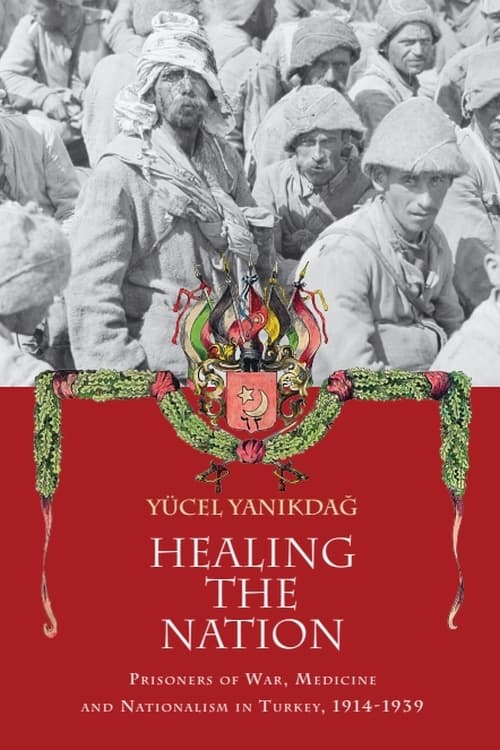
Healing the Nation
Prisoners of War, Medicine and Nationalism in Turkey, 1914-1939

Our ebooks are read in the Academic Reader app. After you buy, we’ll email you how to open your ebook in it.
Description
Explores how the Great War influenced the construction of identity and nationalism in the Ottoman Empire
What did Ottoman prisoners of war imprisoned in Russia and Egypt during the Great War understand of nation, culture and Islam? And what role did science play in the imagined future of the nation for the Ottoman-Turkish psychiatrists who diagnosed prisoners following post-war repatriation?
Doctors’ interpretation of prisoners’ health issues led to far-reaching questions about the relationship between the prisoners’ physical bodies and mental states on the one hand, and the body politic and collective mentality of the Turkish Republic during the interwar period, on the other.
During the interwar years, when the military’s vigour was still taken to be a reflection of the nation's health, doctors projected the worrisome picture of the shattered nerves of both prisoner and non-prisoner alike onto the nation at large. The Great War revealed the poor health of the nation and gave medical men the chance to regenerate it through eugenics. Just as officer prisoners in the camps excluded ignorant peasants from their discursive construction of the nation, the psychiatrists disqualified those seen to threaten the nation’s body.
Key Features- Uses previously untapped sources to reveal a new story of prisoners, medicine and nationalism
- Broadens the discussion of nationalism to include both ideological and biological factors
- Explores the social, demographic, psychological and medical impact of the Great War on the Ottoman Empire and Modern Turkey
Contents
Acknowledgements; Author’s note on usage; List of maps and figures; List of tables INTRODUCTION; 1. THE OTTOMAN GREAT WAR AND CAPTIVITY IN RUSSIA AND EGYPT; 2. IMAGINING COMMUNITY AND IDENTITY IN RUSSIA AND EGYPT: A COMPARISON; 3. SAVIOUR SONS OF THE NATION: INSIDE THE PRISONERS’ MINDS; 4. PRISONERS AS DISEASE CARRIERS: CASES OF PELLAGRA AND TRACHOMA; 5. WAR NEUROSIS AND PRISONERS OF WAR: WARTIME NERVOUS BREAKDOWN AND THE POLITICS OF MEDICAL INTERPRETATION; 6. DEGENERATIONIST PATHWAY TO EUGENICS: NEURO-PSYCHIATRY, SOCIAL PATHOLOGY AND ANXITIES OVER NATIONAL HEALTH; EPILOGUE: THE SEARCH FOR A USEABLE PAST: PRISONERS OF WAR, THE OTTOMAN GREAT WAR AND TURKISH NATIONALISM; Bibliography; Index
Author
Reviews
Yanikdag (Univ. of Richmond) has written a fascinating book about Ottoman prisoners of war during WW I and the development of the Republic of Turkey and Turkish identity...A very valuable study for all interested in military and medical history as well as the development of nation-states.'
Yanikdag (Univ. of Richmond) has written a fascinating book about Ottoman prisoners of war during WW I and the development of the Republic of Turkey and Turkish identity...A very valuable study for all interested in military and medical history as well as the development of nation-states.'
Weaved together in a comprehensive work with inquisitive reasoning and clever writing style, [Healing the Nation] deserves a warm welcome to historiography.
Weaved together in a comprehensive work with inquisitive reasoning and clever writing style, [Healing the Nation] deserves a warm welcome to historiography.'
This highly original and impeccably researched study helps us understand not only the workings of the Ottoman military establishment but also the state formation in the late Ottoman Empire and the influence of German theories of medicine, psychiatry and eugenics in this complex process.
This is a fascinating study, readable, always interesting, well written and set out and based on extensive primary research in the Ottoman archives, in the Public Record Office, in the US national archives, in the camp newspapers and drawing on a host of other material. As a study of the health consequences of war, Healing the Nation should appeal to doctors and psychiatrists as well as students of late Ottoman and early republican Turkish history.
This is a fascinating study, readable, always interesting, well written and set out and based on extensive primary research in the Ottoman archives, in the Public Record Office, in the US national archives, in the camp newspapers and drawing on a host of other material. As a study of the health consequences of war, Healing the Nation should appeal to doctors and psychiatrists as well as students of late Ottoman and early republican Turkish history.'
The original sources and new insights offered by Healing the Nation gives scholars of the Ottoman Empire, Turkey, and the modern Middle East much to consider. Few, if any, works preceding this study have considered the history and legacy of wartime internment, thus adding considerably to the breadth of our understanding of World War I.
The original sources and new insights offered by Healing the Nation gives scholars of the Ottoman Empire, Turkey, and the modern Middle East much to consider. Few, if any, works preceding this study have considered the history and legacy of wartime internment, thus adding considerably to the breadth of our understanding of World War I.'
'Healing the Nation is a very important, well-researched, and original contribution to the literature and should inspire new studies on the topic.'
`Yanıkdağ’s skill and craft as a social historian shines brightly in this account of Ottoman soldiers who were not heroes, as he tells us two stories at once: the tale of those who were silenced and that of those who did the silencing...His work is a must read for any scholar or interested observer who would like to go deeper into the ethics of military heroism as it has been embraced by Turkish national official and mundane, at the expense of untold stories of what war really does to us all.`
`Yanıkdağ’s skill and craft as a social historian shines brightly in this account of Ottoman soldiers who were not heroes, as he tells us two stories at once: the tale of those who were silenced and that of those who did the silencing...His work is a must read for any scholar or interested observer who would like to go deeper into the ethics of military heroism as it has been embraced by Turkish national official and mundane, at the expense of untold stories of what war really does to us all.`
beginning with tracing Turkish nationalism among POWs and following with the analysis of the reports of medical doctors, Yanıkdağ creates a unique and untraditional approach to point out the trajectory of the emergence of Turkish nationalism among POWs…the author’s approach is a methodologically creative way to discuss the Ottomans’ role in the Great War. Consequently, the medical publications, the bibliography, and above all the prisoners’ literature, including prison-camp newspapers, poems, folk songs, and cartoons that the author unearthed, make the book a real gem for scholars.
This highly original and impeccably researched study helps us understand not only the workings of the Ottoman military establishment but also the state formation in the late Ottoman Empire and the influence of German theories of medicine, psychiatry and eugenics in this complex process.
Goes well with this book
From the same series or subject.
- Healing the Nation, Ebook (EPUB), £31.00
- Biography of an Ottoman Provincial Town, Ebook (EPUB), £85.00
- Demographic Anxiety in Turkey, Ebook (EPUB), £90.00
More in IMES
View allEbook (EPUB)£90.00
Ebook (EPUB)£14.99
Ebook (EPUB)£100.00
Ebook (EPUB)£95.00