Ebook (EPUB)£125.00
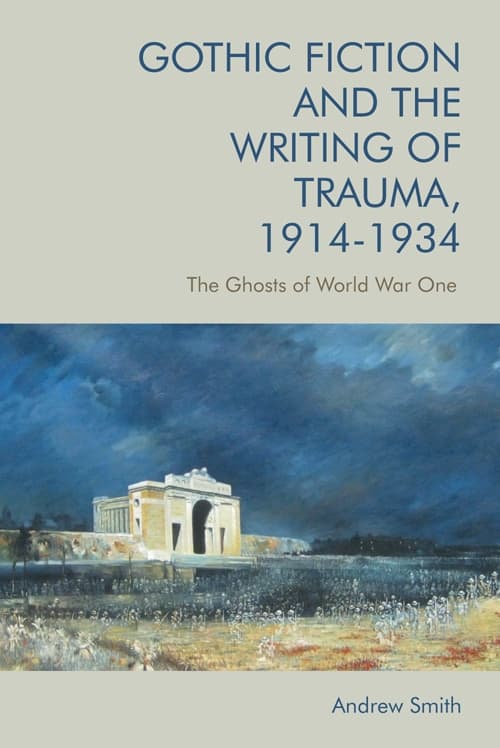
Gothic Fiction and the Writing of Trauma, 1914–1934
The Ghosts of World War One

Our ebooks are read in the Academic Reader app. After you buy, we’ll email you how to open your ebook in it.
Description
Winner of the Allan Lloyd Smith Prize 2024!
The first detailed analysis of Gothic literature and trauma in World War One
- Explores how the Gothic shaped, and controlled, cultural anxieties about the war
- Provides a unique critical revision of the figure of the ghost across a wide range of literature from the period
- Draws on the Imperial War Museum’s archives (including accounts of the war by less-well-known figures such as Jack Martin and Ronald Skirth)
- Critically complicates the view of the Gothic as articulating, rather than containing, trauma
This book examines how the representation of the ghost-soldier in literature published between 1914–1934, both marks the presence of trauma and attempts to make sense of it. Andrew Smith examines short stories, novels, poems and memoirs that employ ghosts to reflect upon feelings of loss, paralleling the literary context with accounts of shell-shock which construe the damaged soldier as psychologically missing and therefore spectre-like.
The author argues that literary and non-literary texts repeatedly deploy a form of the uncanny, familiar from a Gothic tradition, as a way of reflecting upon grief. In support of this claim, he draws on fiction by well-known authors such as M. R. James, E. F. Benson, Dorothy L. Sayers, and Dennis Wheatley, alongside largely forgotten contributions to The Strand and other periodical publications such as The Occult Review.
Contents
Acknowledgements
Introduction: the ghosts of war
1. The Psychology of War: Gothic and the Redirection of the Uncanny
2. The Ghosts of War: Writing Trauma
3. Spiritualism, War, and the Modernist Gothic
4. Aftershock: Malevolent Ghosts and the problem of memory
Conclusion: Ghostly afterlives
BibliographyIndex
Author
Reviews
In the course of this finely argued book, Andrew Smith offers an important historicist revision of Freud on trauma and the uncanny before moving on to explore a hugely impressive range of ghost-texts written during the First World War and later. The criticism is acute and sensitive, the historical context vividly drawn.
This extraordinary book draws on resources both literary and otherwise, to make sense of the unexpected cultural work done by ghost stories during the First World War. As one panelist says, the book is “a deftly assembled, compellingly argued, and sensitively written examination of the Gothic’s work mediating the traumatic experiences and losses of the Great War by way of its army of ghosts – homely, homeless, malevolent, restless. A major contribution to the rapidly expanding field of War/Battlefield Gothic, this study remains, tragically, timely and topical.”
Another panelist stated that the book is, “a weighty and serious work that has already begun to influence how I think about ghost stories. Smith also notably combines attention to canonical Modernist texts with little-known fiction, both of which expand the Gothic canon in different ways.”
This is a vital book for anybody working on ghost fiction in any period, and for any scholar of war or of trauma, in any period. Smith’s book helps us think in subtle, new ways about how gothic representation can be part of struggles to come to terms with mass suffering. Smith shows the contradictory, surprising, and moving ways in which ghost stories are part of such cultural work - cultural work which is, sadly, of continuing and sharp relevance.
Goes well with this book
From the same series or subject.
- Gothic Fiction and the Writing of Trauma, 1914–1934, Ebook (EPUB), £20.99
- Narrative of the Life of Sir Walter Scott, Bart., Volume II, Ebook (EPUB), £125.00
- Intermedial Authorship, Ebook (EPUB), £110.00
More in Literary Studies
View allEbook (EPUB)£110.00
Ebook (EPUB)£90.00
Ebook (EPUB)£90.00
Ebook (EPUB)£90.00