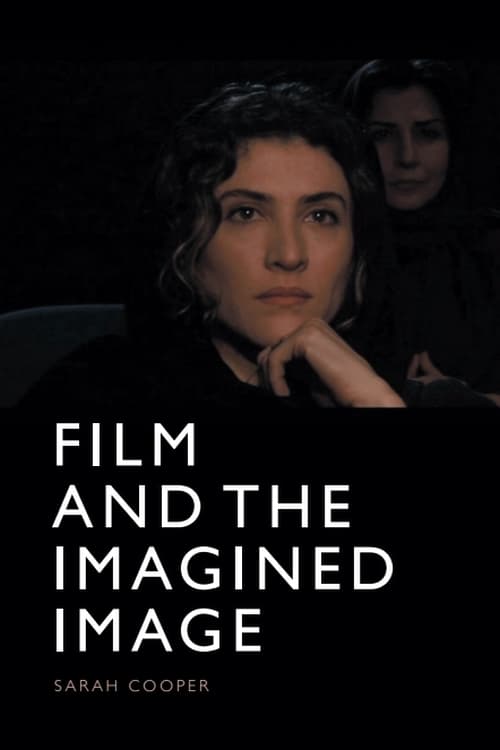
Film and the Imagined Image

Our ebooks are read in the Academic Reader app. After you buy, we’ll email you how to open your ebook in it.
Description
From documentary to art-house cinema – and from an abundance of onscreen images to their complete absence – films that experiment variously with narration, voice-over and soundscapes do not only engage viewers’ thoughts and senses. They also make an appeal to visualise more than is perceptible on screen.
This book explores the extraordinary ways in which film can stimulate and direct the image-making capacity of the imagination. Bringing together an international range of films with debates in philosophy, film theory, literary scholarship and cognitive psychology, author Sarah Cooper charts the key processes that serve the imagining of images in the light of the mind.
Through its navigation of a labile and vivid mental terrain, this innovative work makes a profound contribution to the study of spectatorship.
Key features- Examines documentaries and essay films, imageless films and art-house cinema, feature-length works and shorts
- Provides an innovative approach to spectatorship studies by deriving the principal mental processes of image formation that it outlines from the wide selection of films under discussion
- Highlights how and where imagination and perception relate to one another, thereby opening up the more exclusive foregrounding of perception within recent phenomenological film theory
Contents
Acknowledgements
Part I: Dual Vision
1. Seeing Pictures
2. Feeling Pictures
Part II: Making Mental Motion Pictures
3. Layering
4. Volumising
5. Supplementing
6. Reshaping
7. Erasing
Conclusion: Broadening Out
Postscript
Notes
Bibliography
Filmography
Author
Reviews
Film and the Imagined Image is an impressive and meticulous study of the ways in which film prompts the spectator to form mental images. An extremely innovative work that fleshes out an under-theorised line of inquiry into the spectatorship of film [...] an immensely astute and thorough exploration of the ‘how’ of mental imagery in the process of watching film.
In this elegantly argued book, Cooper interrogates the ways in which movies use the viewer's image bank of memories, dreams, and associations to co-create the film that appears on the screen. Beautifully written, with numerous examples from a wide range of films, this is an engaging but challenging book.
Cooper dives into an exploration of how cinematic narration can prompt spectators to form pictures in their minds beyond what is shown on screen. This monograph achieves remarkable clarity in its central idea that the activity of imagining is bound inextricably to perception and that the mental visual images formed by the audience both depend on and are independent from the images on screen.
[...] Cooper permeates our imaginations and provides us with not only a voice of kinship in our filmic imaginings but also a set of concepts that help us to understand how we generate other images when we experience images on screen. [...] Cooper achieves something remarkably rare in an academic monograph: she helps us understand why we see other images in our minds when we look at the images on a screen. This book speaks directly to your imagination and your personal experience of viewing and imagining, in an intimate and reciprocal relationship, and actively propels the reader into a newly nuanced realm of understanding.
It is rare to come across a book which combines rigorous scholarship with love for film as powerfully as this; rarer still to read a book which changes the way you watch, think about, and enjoy cinema. This is a remarkable, unforgettable work which places imagination at the heart of our experience of film.
Goes well with this book
From the same series or subject.
- Film and the Imagined Image, Ebook (EPUB), £23.99
- Adapting American Adulthood, Ebook (EPUB), £90.00
- Isabelle Adjani, Ebook (PDF), £19.99
More in Film Studies
View all
Ebook (EPUB)£90.00
Ebook (PDF)£19.99
Ebook (EPUB)£95.00
£24.99