Ebook (EPUB)£85.00
Ancient History & Classical Studies
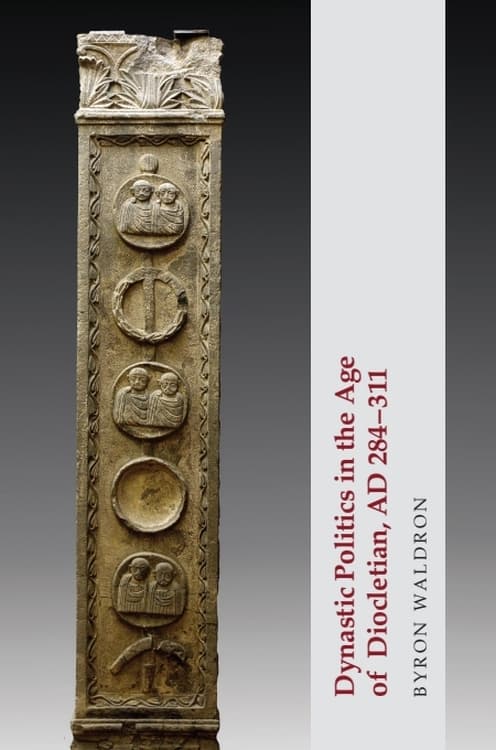
Dynastic Politics in the Age of Diocletian, AD 284-311

Our ebooks are read in the Academic Reader app. After you buy, we’ll email you how to open your ebook in it.
Description
Examines the Tetrarchy as an experimental military dynasty
- Looks at brotherhood, empresses, imperial collegiality, military politics, hereditary succession, and the roles of sons within Roman dynasties
- Musters a diverse array of evidence including archaeology, coins, statuary, inscriptions, panegyrics and invective
- Engages with Anglo-American, German, French, Italian and Balkan scholarship
In AD 293 the Roman world was plunged into a bold new experiment in government. Four soldiers shared the empire between them: two senior emperors, Diocletian and Maximian, and two junior emperors, Constantius and Galerius. This regime, now known as the Tetrarchy, engaged with dynastic power in thoroughly unconventional ways: Diocletian and Maximian presented themselves as brothers despite being unrelated; Diocletian and Galerius repeatedly thwarted the dynastic ambitions of individual Tetrarchs and their sons; the sons themselves were variously hostages, symbols of imperial unity and possibly targets of assassination; and the importance of women to imperial self-representation was much reduced.
This is the first book to focus on the Tetrarchy as an imperial dynasty. Examining the dynasty through the lens of Rome’s armies, it presents the Tetrarchic dynasty as a military experiment, created by a network of provincial career soldiers and tailored to the needs of the different regional armies. Mustering a diverse array of evidence, including archaeology, coins, statuary, inscriptions, panegyrics and invective, the author provides bold new interpretations of Tetrarchic dynastic politics, looking at brotherhood, empresses, imperial collegiality, military politics, hereditary succession and the roles of sons within Roman dynasties.
Contents
List of FiguresPreface and Acknowledgements
Introduction: A Military Regime in the Third Century AD
1. Band of Brothers: Diocletian and Maximian, Virtutibus Fratres
2. Gang of Four: The Tetrarchy Begins
3. Diocletian vs Heredity: Succession Events and the Soldiery
4. A Tale of Two Princes: Constantine and Maxentius before 306
5. Invisible Feminae and Galerian Empresses: The Representation of Imperial Women
Conclusions: Domus Militaris
Appendix: Prosopography of the Imperial Women
BibliographyIndex
Author
Reviews
There is much to commend in this book. By discussing, analyzing, and explaining the ancient sources on which his study is based, Waldron makes his book attractive to advanced undergraduate and graduate students and to non-specialists as an introduction to the Tetrarchs. But his monograph also offers much to scholars and specialists, who will discover a fruitful focus on the Tetrarchs as a dynasty during the age of Diocletian, whose domestic, not foreign, concerns drove him to devise a new scheme of imperial presence.
In this wide-ranging and accessible book, Byron Waldron marshals a variety of evidence into an original and coherent argument about a controversial period of Roman history - the so-called ‘Tetrarchy’. This sympathetic and up-to-date treatment brings Diocletian to life for a new generation of scholars and students alike’
Goes well with this book
From the same series or subject.
- Dynastic Politics in the Age of Diocletian, AD 284-311, Ebook (EPUB), £25.99
- Cicero, the causa Curiana, and the Origins of Competitive Oratory, Ebook (EPUB), £85.00
- Revelation as Divination, Ebook (EPUB), £100.00

More in Ancient History & Classical Studies
View allEbook (EPUB)£100.00
Ebook (EPUB)£95.00
Ebook (EPUB)£95.00
Ebook (EPUB)£135.00