
Ebook (EPUB)£25.99
LawFuture Law: Challenges for Law, Technology and Culture
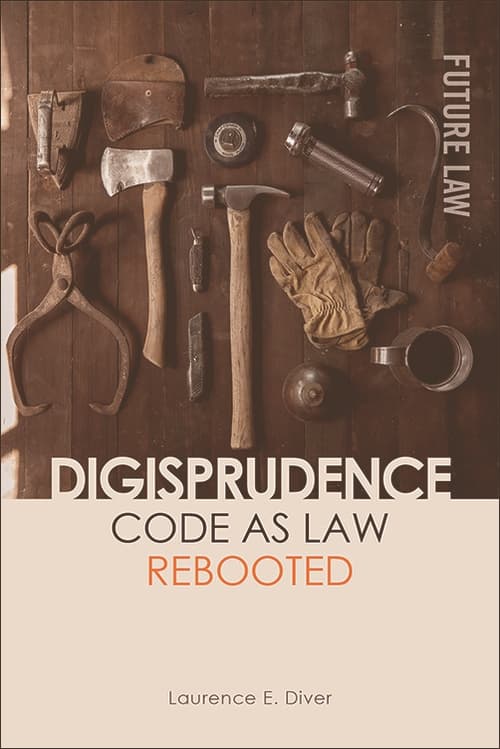
Digisprudence: Code as Law Rebooted
Open access
Open access under CC-BY-NC 4.0
Description
Reboots the debate on ‘code as law’ to present a new cross-disciplinary direction that sheds light on the fundamental issue of software legitimacy
- Reinvigorates the debate at the intersection of legal theory, philosophy of technology, STS and design practice
- Synthesises theories of legitimate legal rulemaking with practical knowledge of code production tools and practice
- Proposes a set of affordances that can legitimise code in line with an ecological view of legality
- Draws on contemporary technologies as case studies, examining blockchain applications and the Internet of Things
Laurence Diver combines insight from legal theory, philosophy of technology and programming practice to develop a new theoretical and practical approach to the design of legitimate software. The book critically engages with the rule(s) of code, arguing that, like laws, these should exhibit certain formal characteristics if they are to be acceptable in a democracy. The resulting digisprudential affordances translate ideas of legitimacy from legal philosophy into the world of code design, to be realised through the ‘constitutional’ role played by programming languages, integrated development environments (IDEs), and agile development practice. The text interweaves theory and practice throughout, including many insights into real-world technologies, as well as case studies on blockchain applications and the Internet of Things (IoT).
Whenever you use a smartphone, website, or IoT device, your behaviour is determined to a great extent by a designer. Their software code defines from the outset what is possible, with very little scope to interpret the meaning of those ‘rules’ or to contest them. How can this kind of control be acceptable in a democracy? If we expect legislators to respect values of legitimacy when they create the legal rules that govern our lives, shouldn’t we expect the same from the designers whose code has a much more direct rule over us?
Contents
1. IntroductionThe Structure of the ArgumentRebooting ‘Code as Law’Aspiring to Legitimacy in Code‘Code as Law’, Code Versus Law, or Something Else?Concluding
Part I: Computational Legalism and the Rule(s) of Code
2. A Design Perspective: Code Is More Than LawAffordanceInfusing Code with Normativity
3. A Legal Philosophy Perspective: Code is Less Than LawWhat is Legalism?Computational LegalismConclusion
Part II: What Makes a Good Rule?
4. Criteria for LawsNormative Criteria for Law-Making: the Aspirations of LegalityConclusion
5. Criteria for CodeInput and Output Legitimacy in CodeInput LegitimacyConclusion
Part III: Legitimating Code: Theory and Practice
6. The Digisprudential AffordancesAssessing Decisions, Or Assessing Design?Mapping the CriteriaFrom Characteristics To AffordancesConclusion
7. Operationalising DigisprudenceThe Programmer of the ProgrammerAgile DevelopmentIntegrated Development EnvironmentsCode and Natural LanguageConclusion
8. Rebooting Code as Law: Conclusions and Next StepsThe Contemporary Relevance of DigisprudenceNext Steps?Concluding Thoughts
Author
Reviews
This book offers exceptionally well-argued insights on law and technology. Diver’s understanding and deployment of ideas from legal theory and a range of disciplines makes this a brilliant critique of how we have come to understand "code" and the role of those who design it. With the regulation of emerging technologies and of powerful players high on the political agenda – concerns still too often simplified or misunderstood – Digisprudence presents fresh and exciting ways of understanding these issues.
Goes well with this book
From the same series or subject.
From the same series
More in Future Law: Challenges for Law, Technology and Culture
Ebook (EPUB)£33.99

Ebook (EPUB)£29.99
Hardback£200.00
Ebook (EPUB)£100.00