Ebook (EPUB)£95.00
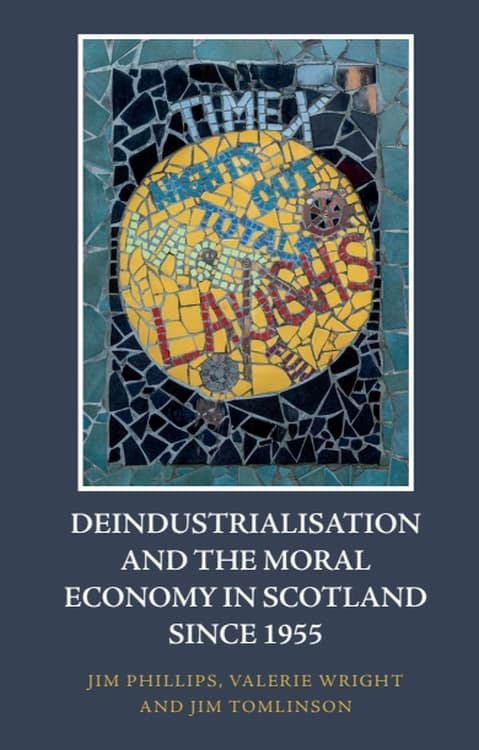
Deindustrialisation and the Moral Economy in Scotland since 1955

Our ebooks are read in the Academic Reader app. After you buy, we’ll email you how to open your ebook in it.
Description
Exploring the social, cultural and political implications of deindustrialisation in twentieth-century Scotland
- Examines deindustrialisation as long-running, phased and politicised process
- Draws on documentary source material from a range of industrial sectors, as well as transcripts from over 20 exclusive interviews with industry professionals
- Relates Scottish Home Rule to long-running debates about economic security and working class welfare
- Analyses longer history of deindustrialisation, with emergence of assembly goods manufacturing alongside shrinkage of established sectors such as shipbuilding
Deindustrialisation is the central feature of Scotland’s economic, social and political history since the 1950s, when employment levels peaked in the established sectors of coal, shipbuilding, metals and textiles, along with the railways and docks. This book moves analysis beyond outmoded tropes of economic decline and industrial catastrophe, and instead examines the political economy of deindustrialisation with a sharp eye on cultural and social dimensions that were not uniformly negative, as often assumed.
Viewing the long-term process of deindustrialisation through a moral economy framework, the book carefully reconstructs the impact of economic change on social class, gender relations and political allegiances, including a reawakened sense of Scottish national identity. In doing so, it reveals deindustrialisation as a more complex process than the customary body count of closures and job losses suggests, and demonstrates that socioeconomic change did not just happen, but was influenced by political agency.
Contents
List of Tables and Figures; Acknowledgements; List of AbbreviationsIntroductionPart One: Understanding DeindustrialisationChapter 1. Deindustrialisation as Historical and Global PhenomenonChapter 2. The Moral Economies of DeindustrialisationChapter 3. Scotland and the Age of DeindustrialisationPart Two: The Politics of DeindustrialisationChapter 4. Fairfields, Govan: Shipbuilding and the Scottish NationChapter 5. Linwood, Renfrewshire: Car Manufacturing and Scotland’s Political DivergenceChapter 6. Timex, Dundee: Watches, Electronics and the Moral Economy Part Three: Legacy and EvaluationChapter 7. Deindustrialisation since the 1990sConclusion; Bibliography
Authors
Goes well with this book
From the same series or subject.
- Deindustrialisation and the Moral Economy in Scotland since 1955, Ebook (EPUB), £27.99
- Presbyterian Strathspey in the Jacobite Era, Ebook (EPUB), £95.00
- The Estate and the Country House in Scotland, circa 1700, Ebook (EPUB), £95.00
More in Scottish Studies
View allEbook (EPUB)£95.00

Ebook (EPUB)£95.00
Ebook (EPUB)£95.00