Ebook (EPUB)£125.00
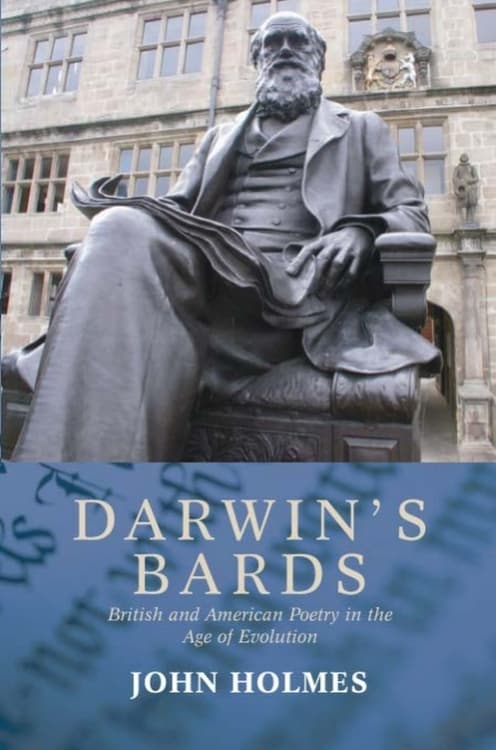
Darwin's Bards
British and American Poetry in the Age of Evolution

Our ebooks are read in the Academic Reader app. After you buy, we’ll email you how to open your ebook in it.
Description
How the most powerful and perceptive British and American poets grapple with the questions raised by Darwinism
With more than 50 complete poems and wide-ranging extracts from several more, this substantial volume shows how poets responded to the discovery of evolution, from Alfred Tennyson, Robert Browning and Thomas Hardy, through Robert Frost and Edna St Vincent Millay, to Ted Hughes, Thom Gunn, Amy Clampitt, Pattiann Rogers and Edwin Morgan. Written as much for scientists, philosophers and ecologists as poets, critics and students of literature, Darwin’s Bards is a timely intervention in today’s debates surrounding Darwin’s legacy for the distinct, yet related worlds of religion, ecology and the arts.
The book will appeal to readers for its discussion of the existential implications of Darwinism, for its close readings of poetry, and for the reprinted poems themselves.
Key Features- Covers poetry and ecology, as well as the implications of Darwinism for religion
- The combination of complete poems and long extracts with an interpretative framework and close readings makes the book an effective and attractive text book
Want to find out more? Check out Darwin & Poetry? An Interview with John Holmes
Poems in Darwin’s BardsA. R. Ammons: ‘Questionable Procedures’Philip Appleman: ‘How Evolution Came to Indiana’, ‘Waldorf-Astoria Euphoria’D. M. Black: ‘Kew Gardens’Mathilde Blind: The Ascent of Man [extracts] Robert Browning: ‘Caliban upon Setebos’ [extracts] William Canton: ‘The Latter Law’ [sonnet from a sequence]Stephen Crane: ‘A man said to the universe’Richard Eberhart: ‘Sea-Hawk’Robert Frost: ‘Design’, ‘The Oven Bird’, ‘The Most of It’, ‘Our Hold on the Planet’ Thom Gunn: ‘Adultery’, ‘The Garden of the Gods’Thomas Hardy: ‘Hap’, ‘Your Last Drive’, ‘Rain on a Grave’, ‘At Castle Boterel’, ‘An August Midnight’, ‘The Darkling Thrush’, ‘Shelley’s Skylark’, ‘The Fallow Deer at the Lonely House’, ‘To Outer Nature’, ‘On a Fine Morning’Robinson Jeffers: ‘Vulture’, Cawdor [extract], ‘Rock and Hawk’George Meredith: ‘The Woods of Westermain’ [opening lyric], ‘In the Woods’ [8 lyrics out of a sequence of 9], ‘The Lark Ascending’ [extracts], Modern Love [3 sonnets from a sequence], ‘Ode to the Spirit of Earth in Autumn’ [extracts]Edna St Vincent Millay: ‘The Fawn’, ‘I shall forget you presently, my dear’, Fatal Interview [2 sonnets from a sequence]Edwin Morgan: ‘Eohippus’, ‘The Archaeopteryx’s Song’, ‘Trilobites’Lewis Morris: ‘Ode of Creation’ [extract]Constance Naden: ‘Natural Selection’Agnes Mary Robinson: ‘Darwinism’Pattiann Rogers: ‘Against the Ethereal’, ‘The Possible Suffering of a God During Creation’, ‘Geocentric’Neil Rollinson: ‘My Father Shaving Charles Darwin’John Addington Symonds: ‘An Old Gordian Knot’ [sonnet from a sequence]Alfred Tennyson: ‘Flower in the Crannied Wall’, ‘By an Evolutionist’, ‘The Dawn’, ‘The Making of Man’, ‘Frater Ave atque Vale’, ‘Lucretius’ [extracts]Contents
AcknowledgementsPreface 1. Poetry in the Age of DarwinScience, poetry and literary criticismWhose ‘Darwinism’? The Darwinian tradition in modern poetryPoetry and Darwinism in practice: Three poems by Edwin Morgan 2. Poetry and the ‘Non-Darwinian Revolution’Non-Darwinian evolution in late Victorian poetryPseudo-Darwinism and bad faith: A. C., Swinburne and Mathilde BlindReading A Reading of Earth: George Meredith’s later poetryDoubting progress: Science and evolution in Tennyson’s last poems 3. God: Darwinism, Christianity and theologyHappenstance or design? Two sonnetsNatural theology: Robert Browning’s ‘Caliban upon Setebos’ God after Darwin: Three contemporary American poets and the Book of Job 4. Death: Darwinism, death and immortality‘In the Woods;: George MeredithDeath and dying: Robinson JeffersLove and loss: Thomas Hardy 5. Humanity’s Place in Nature‘The exact centre’, or just another African ape? ‘An idiot on a crumbling throne’: The cosmic perspective‘Earths catastrophe’: The planetary perspective‘All we’ve got’: The human perspective 6. Humans and Other AnimalsMore than kin and less than kindAt ‘the master-fulcrum of violence’: Hawks and falcons‘A diminished thing’: Songbirds and birdsong‘Someone else additional to him’: Deer in modern poetry 7. Love and SexDarwinism and sexA Darwinian sex comedy: Constance Haden’s ‘Evolutional Erotics’The Darwinian love sonnet: George Meredith and Edna St Vincent MillayMetamorphosis: Thom Gunn and the human animal 8. On BalanceFor better or for worse‘The just proportion of good to ill’: Weighing up evolutionDisenchantment and re-enchantment: The power of paradoxDarwin’s pagans: Meredith’s ‘Ode3’ and Tennyson’s ‘Lucretius’Conclusion BibliographyIndexPoems in Darwin’s Bards:A. R. Ammons: ‘Questionable Procedures’Philip Appleman: ‘How Evolution Came to Indiana’, ‘Waldorf-Astoria Euphoria’D. M. Black: ‘Kew Gardens’Mathilde Blind: The Ascent of Man [extracts] Robert Browning: ‘Caliban upon Setebos’ [extracts] William Canton: ‘The Latter Law’ [sonnet from a sequence]Stephen Crane: ‘A man said to the universe’Richard Eberhart: ‘Sea-Hawk’Robert Frost: ‘Design’, ‘The Oven Bird’, ‘The Most of It’, ‘Our Hold on the Planet’ Thom Gunn: ‘Adultery’, ‘The Garden of the Gods’Thomas Hardy: ‘Hap’, ‘Your Last Drive’, ‘Rain on a Grave’, ‘At Castle Boterel’, ‘An August Midnight’, ‘The Darkling Thrush’, ‘Shelley’s Skylark’, ‘The Fallow Deer at the Lonely House’, ‘To Outer Nature’, ‘On a Fine Morning’Robinson Jeffers: ‘Vulture’, Cawdor [extract], ‘Rock and Hawk’George Meredith: ‘The Woods of Westermain’ [opening lyric], ‘In the Woods’ [8 lyrics out of a sequence of 9], ‘The Lark Ascending’ [extracts], Modern Love [3 sonnets from a sequence], ‘Ode to the Spirit of Earth in Autumn’ [extracts]Edna St Vincent Millay: ‘The Fawn’, ‘I shall forget you presently, my dear’, Fatal Interview [2 sonnets from a sequence]Edwin Morgan: ‘Eohippus’, ‘The Archaeopteryx’s Song’, ‘Trilobites’Lewis Morris: ‘Ode of Creation’ [extract]Constance Naden: ‘Natural Selection’Agnes Mary Robinson: ‘Darwinism’Pattiann Rogers: ‘Against the Ethereal’, ‘The Possible Suffering of a God During Creation’, ‘Geocentric’Neil Rollinson: ‘My Father Shaving Charles Darwin’John Addington Symonds: ‘An Old Gordian Knot’ [sonnet from a sequence]Alfred Tennyson: ‘Flower in the Crannied Wall’, ‘By an Evolutionist’, ‘The Dawn’, ‘The Making of Man’, ‘Frater Ave atque Vale’, ‘Lucretius’ [extracts]
Author
Reviews
Darwin's Bards affords subtle, precise, sharp-eyed readings of verse by such well-known Victorian poets as Tennyson, Browning, Meredith, Swinburne and Hardy, as well as more recent poems by the likes of Ted Hughes, Philip Appleman and Thom Gunn. Each of these poets, Holmes argues, grapples with the fundamental, largely unchanging challenges posed by Darwinian evolution, with the book's chapters each focusing on topics including theology, death and immortality, humanity's cosmic insignificance and relationship with other animals, and sex and reproduction… the detailed analysis of verse that deals with these issues often yields fresh insights that will be of interest to more historically minded critics.
John Holmes’s coverage of the relationship between science and poetry is remarkably complete. He has a scientist’s grasp of evolutionary theory and a thorough understanding of both the controversies the theory has engendered and the difficulty many have had in finding meaning in an existence framed by Darwinism. Holmes’s investigation of how poetry addresses these problems is unique.
Rich and meticulous analyses ... Darwin’s Bards is important not only because it engages oft-overlooked evolutionary poetry, but because its critical discussions provide us with a heretofore missing link in Darwinian literary criticism; in so doing, they give us new views of our Darwinian realities.
Poetry makes evolution conceivable, letting the ear and the imagination know that which the mind struggles to grasp. With its fine ear for poetry's engagement with the science of its age, Darwin's Bards contributes to this work, encouraging an alertness to and enjoyment of the poetry of evolution.
Darwin's Bards is a welcome study. Holmes has selected a bold and expansive topic, one that needed the careful attention that he has shown it ... No doubt we will hear more about Darwin among the poets (it is to be hoped that we do), and Holmes will have provided this narrative with a fitting point of origin.
John Holmes has produced a forceful, tightly-argued reminder of the challenge that the theory of evolution poses to many of the subjects which literature has marked as its own territory.
Darwin's Bards is a bracing, original and exciting contribution to our understanding and appreciation of the cultural impact of Darwinism; indeed, John Holmes is to be commended for writing an exhilarating and genuinely interdisciplinary study with revealing insights on every page.
One is struck equally by the magnitude of the task that Holmes took on, and his success in achieving his twin goals of tracing the influence of Darwin’s theory on a range of poets, and describing the illumination that their poems can throw in turn on one of the most powerful intellectual currents of our time.
John Holmes’s coverage of the relationship between science and poetry in Darwin’s Bards: British and American Poetry in the Age of Evolution is remarkably complete. He has a scientist’s grasp of evolutionary theory and a thorough understanding of the controversies the theory has engendered. He also understands the difficulty many have had in finding meaning in an existence framed by Darwinism. Holmes’s investigation of how poetry addresses these problems is unique, and he is correct in thinking that, “poems can even change how we think about Darwinism itself.” Evolutionary science provides many of the details for understanding why the world is the way it is, but we need "Darwin's Bards" to help us interpret these details, incorporate them into our collective consciousness, and fully understand what it means to live in a Darwinian world.
Darwin’s Bards is the most exciting work of Darwin scholarship in the past ten or twenty years. Combining a truly flabbergasting overall knowledge of poetry on and around evolutionary themes with a keen critical understanding, it yields a vision of the Darwinian Revolution that caused me, after over forty years of thinking and writing on the subject, to revise substantially my interpretation and evaluation of one of the most important intellectual and cultural events of Western history.
Goes well with this book
From the same series or subject.
- Darwin's Bards, Ebook (EPUB), £25.99
- Narrative of the Life of Sir Walter Scott, Bart., Volume II, Ebook (EPUB), £125.00
- Intermedial Authorship, Ebook (EPUB), £110.00
More in Literary Studies
View allEbook (EPUB)£110.00
Ebook (EPUB)£90.00
Ebook (EPUB)£90.00
Ebook (EPUB)£90.00