Ebook (EPUB)£95.00
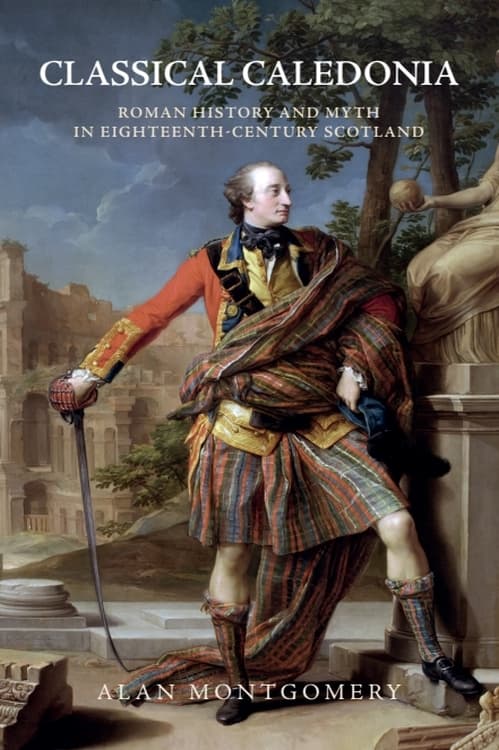
Classical Caledonia
Roman History and Myth in Eighteenth-Century Scotland

Our ebooks are read in the Academic Reader app. After you buy, we’ll email you how to open your ebook in it.
Description
Explores early modern interpretations of Roman Scotland
- Examines an important aspect of the development of Scottish identity, a subject being brought to the fore again in recent debates surrounding Scottish independence
- Offers an in-depth study of a largely overlooked aspect of Scottish historiography
- Makes extensive use of archival and manuscript material, much of it previously unpublished
- Takes a broad, multidisciplinary approach
- Examines the influence of the Scottish Enlightenment, James Macpherson’s Ossianic poems and the rise of Romanticism
This book focuses on early modern attitudes towards Scotland’s ancient past and looks in particular at the ways in which this past was not only misunderstood, but also manipulated in attempts to create a patriotic history for the nation. Adding a new perspective on the formation of Scotland’s national identity, the book documents a century-long, often heated debate regarding the extent of Roman influence north of Hadrian’s Wall. By exploring the lives and writings of antiquarians, poets and Enlightenment thinkers, it aims to uncover the political, patriotic and intellectual influences which fuelled this debate.
Classical Caledonia casts light on a rarely discussed aspect of Scotland’s historiography, one which played a vital role in establishing early modern notions of ‘Scottishness’ at a time when Scotland was coming to terms with radical and traumatic changes to its position within Britain and the wider world.
Contents
Introduction
Scotland: An Indomitable LandInventing a NationScottish Visions of RomeRediscovering Roman Scotland
Chapter 1: Imagining a Classical Caledonia: Sir Robert Sibbald’s Vision of Scotland’s Roman Past
Education, Achievements and AntiquarianismSibbald’s Vision of Roman ScotlandSources and MethodologyInfluences on Sibbald’s Roman ScotlandSibbald’s Antiquarian Reputation and Legacy
Chapter 2: Walled Out of Humanity: Sir John Clerk and his Circle
Early Life and Grand TourAncient Rome and Modern UnionAntiquarian and PatronClerk’s Response to Roman Scotland A Mission to Classicise Scotland
Chapter 3: Resisting the ‘Conquerors of the Universe’: Celebrating the Caledonian Rejection of Rome
Unconquered Caledonia in Anti-Union RhetoricScotland’s Rejection of Rome in Early Eighteenth-Century HistoriographyCaledonian Indomitability in Literary VerseEnglish Attitudes Towards Caledonian Liberty
Chapter 4: ‘Beyond the Vallum’: English Interpretations of Scottish History
William Stukeley, Antiquarianism and RomeStukeley’s Roman ScotlandStukeley’s Sources and InfluencesJohn Horsley and his Britannia RomanaRoman Scotland as Portrayed in Britannia RomanaThe Reputations and Influence of Stukeley and HorsleyOther English Views of Roman Scotland
Chapter 5: ‘Monuments and Delights of the Arts’: Rediscovering the Material Remains of Rome in Scotland
Discovery and ExcavationPrivate Collections of Roman AntiquitiesInstitutional CollectionsScotland’s Roman Inscriptions The Artistic Merits of Scotland’s Roman StonesMisunderstanding and Misrepresentation of Material RemainsAntiquarian Interpretations of Scotland’s Roman Monuments
Chapter 6: Reconquering the Highlands: Hanoverian Interpretations of Roman Scotland
Hanoverian ‘Romans’ versus Highland ‘Caledonians’General Robert Melville and the Rediscovery of Agricola’s CampaignsThe Genesis of William Roy’s Military Antiquities of the Romans in BritainRoy’s Interpretation of Scotland’s Roman HeritageAlexander Shand and his ‘Esteemed Discoveries of the Greatest Importance’Roman Scotland as British History
Chapter 7: The Age of ‘Agricolamania’: Early Modern Uses and Abuses of Tacitus’ Agricola
The Rediscovery and Early Reception of Tacitus’ AgricolaAgricola the HeroAgricola the EnemyAgricolamania
Chapter 8: Forging a Nation: The Spurious Histories of Charles Bertram and James Macpherson
Charles Bertram and the De Situ BritanniaeThe De Situ Britanniae and Roman ScotlandJames Macpherson and the OssianRome Versus Caledonia in the Poems of OssianFilling the Void: The Motivations of Bertram and Macpherson
Chapter 9: After Ossian: Changing Interpretations of Roman Scotland
Later Eighteenth-Century Romanist AntiquarianismRegional AntiquarianismThe Influence of OssianNew Approaches to Scottish HistoryChanging Visions of Scotland
Conclusion
Nineteenth-Century Approaches to Roman EnglandClassical Caledonia: A Study in Historical FailureModern Attitudes to Patriotic Scottish History
Author
Reviews
Classical Caledonia is a much-needed and thorough examination of the power and imagery of the Roman incursions into Scotland which continue to form part of Scottish national identity for Unionists and Nationalists alike.
Montgomery presents an exhaustive and nuanced study of the origins, methodologies, and motivations behind Romanist scholars in the eighteenth century. [...] Classical Caledonia thus is a worthwhile addition to historiographical discourse of the Enlightenment, providing an excellent examination of antiquarian practices and critically challenging the motivations behind antiquarian work.
Written in a clear, easy style, backed by a good supply of endnotes and an extensive bibliography, Alan Montgomery’s welcome contribution to cultural history is valuable in telling the shifting story of how Roman Scotland was perceived by a full cast of characters.
Goes well with this book
From the same series or subject.
- Classical Caledonia, Ebook (EPUB), £22.99
- Presbyterian Strathspey in the Jacobite Era, Ebook (EPUB), £95.00
- The Estate and the Country House in Scotland, circa 1700, Ebook (EPUB), £95.00
More in Scottish Studies
View allEbook (EPUB)£95.00
Ebook (EPUB)£95.00
Ebook (EPUB)£95.00