Ebook (EPUB)£100.00
Ancient History & Classical StudiesEdinburgh Studies in Religion in Antiquity
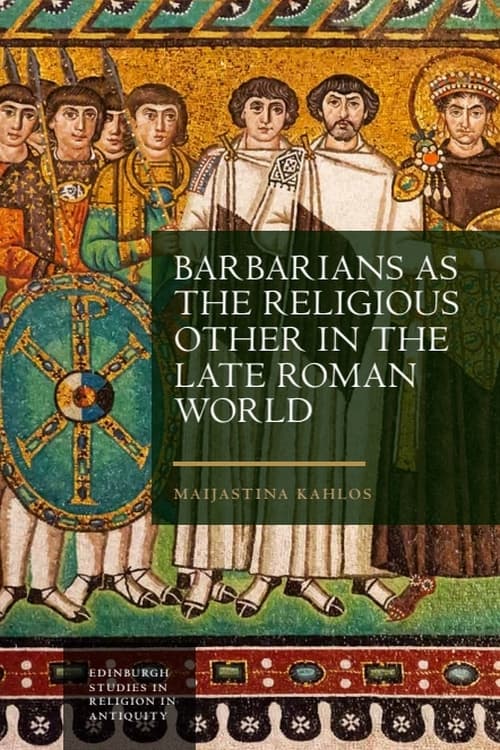
Barbarians as the Religious Other in the Late Roman World

Our ebooks are read in the Academic Reader app. After you buy, we’ll email you how to open your ebook in it.
Description
In a world of religious rivalries and state collapse, how did the looming spectre of the barbarian show what it meant to be Roman in Late Antiquity?
- Explores how Roman and post-Roman authors used the figure of the ‘barbarian’ to negotiate shifting religious, cultural, and political identities
- Highlights the central role of religious affiliation, especially the opposition between Nicene orthodoxy and so-called heretical barbarian Christianity, in constructing Roman self-definition
- Combines analysis of a wide range of Latin and Greek sources, including sermons, hagiography, historiography, and imperial legislation
- Demonstrates how Roman identity was rearticulated through both opposition to and integration with barbarian ruler
Two major transformations of Late Antiquity redefined what it meant to be Roman: the Christianisation of imperial power and the collapse of the Western Roman state. This book examines how Prudentius, Athanasius, Augustine and other Roman and post-Roman writers used the figure of the ‘barbarian’ to articulate these shifting religious, political, and cultural boundaries. Religious identity — especially the divide between Nicene orthodoxy and so-called ‘heretical’ forms such as Homoian Christianity — became a key marker of Romanness. Barbarians such as Goths and Vandals were not only portrayed as ethnic outsiders but also as ‘pagans’ or ‘heretics’, threatening both the Church and Roman civilisation itself. While heresy was often equated with barbarism, Roman elites also downplayed these differences when politically convenient, using religious language to both legitimise and delegitimise power. Through thematic and regional case studies, Kahlos shows how religion, ethnicity and imperial traditions were entangled in the construction of Roman identity – and how ‘barbarians’ were used to define, defend or reshape it.
Contents
Acknowledgements
Abbreviations
Introduction
Part I
1. Christian Romans and Pagan Barbarians?
2. The Taming of Barbarians
3. Unity and Heresy: Barbarian Imagery in Intra-Christian Rivalries
4. Barbarian Warlords and their Religious Choices
Part II
5. Encounters and Social Realities: Visigoths in Gaul
6. Encounters and Social Realities: Vandals in Africa
7. Encounters and Social Realities: Ostrogoths in Italy
Part III
8. Suspicions and Traitors: Barbarising the Rival
9. The Providential Use of Barbarians
10. Eschatology and the Forces of Chaos: Gigantomachia, Gog and Magog
Conclusion
Editions and translations
Bibliography
Author
Reviews
This is an important book that pays a close attention to the intricate ways that religion, politics, cultural perceptions and military events were inextricably intertwined in this crucial transition period. It will serve both as a wonderful introduction to students while experts are bound to learn from it.
Goes well with this book
From the same series or subject.
- Barbarians as the Religious Other in the Late Roman World, Ebook (EPUB), £95.00
- Revelation as Divination, Ebook (EPUB), £100.00
- Magic, Charisma and Violence in Late Antiquity, Ebook (EPUB), £135.00
From the same series
More in Edinburgh Studies in Religion in Antiquity
Ebook (EPUB)£135.00
Ebook (EPUB)£24.99
Ebook (EPUB)£24.99
Ebook (EPUB)£24.99
Ebook (EPUB)£31.00
Ebook (EPUB)£25.99
More in Ancient History & Classical Studies
View all
Ebook (EPUB)£85.00
Ebook (EPUB)£95.00
Ebook (EPUB)£95.00
Ebook (EPUB)£135.00
Ebook (EPUB)£150.00