Ebook (EPUB)£85.00
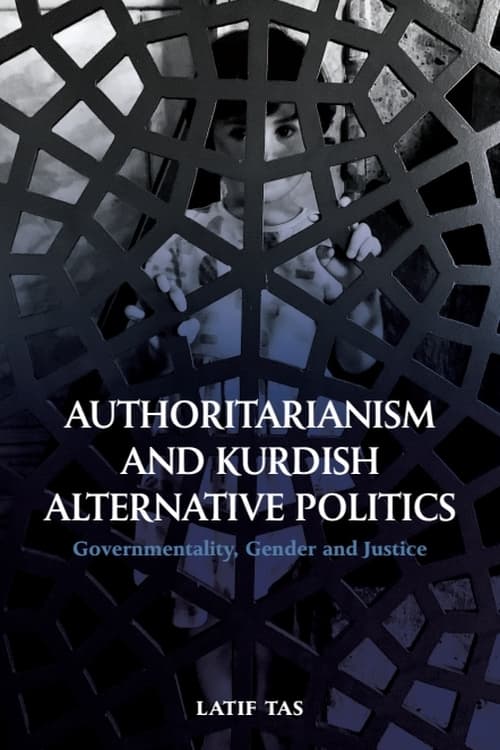
Authoritarianism and Kurdish Alternative Politics
Governmentality, Gender and Justice

Our ebooks are read in the Academic Reader app. After you buy, we’ll email you how to open your ebook in it.
Description
Examines how Kurdish alternative politics and state building result in new forms of governmentality, justice and gender regimes
- Based on 202 interviews with Kurdish female and male activists, politicians, mayors, former and active guerrillas, unofficial court representatives and judges, local religious leaders, and representatives from different Turkish and Kurdish political parties, secular groups and women’s organisations
- Introduces a new theory of alternative governmentality, and explains how this plays an important role for emerging parallel powers and alternative state-making processes
- Contributes to and challenges existing debates on authoritarianism and governmentality in the Middle East and Europe
- Engages critically with ‘radical democracy’ and ‘democratic federalism’ as they are articulated and practised by the Kurdish political movement
- Gives insight into the lived experiences and daily lives of Kurdish women and men under authoritarian rule, from the Kurdish cities of Mardin, Kars and Diyarbakir
Latif Tas investigates the triangular relationship between nationalism, justice and gender politics to explore how influencing this dynamic allows authoritarian rulers to stay in power for longer and justify their actions for monopolising power.
Based on ethnographic research in Turkey, Syria, and Iraqi Kurdistan, as well as Kurdish diasporas in Europe, the book examines how communities challenge existing state power, authoritarianism and control. It focuses on alternative legal and political practices established by the PKK (Kurdistan Worker’s Party) such as local policing, informal judicial mechanisms and taxing, and shows how this divergence from state-led systems forges a sense of community among Kurds and creates a de-facto parallel state. It pays particular attention to the Kurdish political movement’s success in achieving its aim of redressing gender-based injustices to create an equal society.
Contents
Introduction
- Authoritarian and alternative governmentalities
- Mardin and Diyarbakir: Ethnographic account of conflict
- Monopolistic nationalism and decomposing state
- Gender, politics and alternative governmentality
- Parallel justice and alternative governmentality
Conclusion
Author
Reviews
We constantly need to understand the nature and evolution of authoritarian regimes. We must understand how these regimes disrupt lives and how people react to them. Latif Tas' book contributes to this important endeavor by focusing on Kurds' stories. Tas' approach is direct, aimed at comprehending the everyday struggles of people.
Kurds are among America's best friends globally with whom western countries share both values and strategic interests. The dynamic of Kurdish international relations is explored on these pages. Authoritarianism and Kurdish Alternative Politics is a "must-read" for faculty, students and followers of the Middle East.
In a time when Erdogan’s Turkey has come to epitomize brutal authoritarianism, Latif Tas deciphers the logics of power at work in this regime, contrasting them with the invention of an alternative form of governmentality in Kurdish territories. Exploring justice worlds, human rights, and gender relations, his imaginative ethnography is a fascinating invitation to rethink politics in the region.
Tas walks you through the Kurdish streets while conversing with Kurdish activists, former female PKK fighters, Assyrians, ordinary people, and Turkish police. This well-written ethnographic study devoid of academic jargon, presents a critical approach to the Turkish state and Kurdish political movement. Undoubtedly, this book will be a great source to the interested public and enrich MENA syllabuses in general and Kurdish studies in particular.
In times of oligarchical political systems sourced to the corrosion of trust and hope across the globe, Latif Tas has a fascinating tale about defiance, how sovereign people can still radicalize democracy in opposition to state power and authoritarian rule. With deft ethnographic sensibility, Tas opens a path forward for rethinking governmentality in his remarkable account of a uniquely Kurdish alternative.
The intellectual audacity shown here by the author, by relying on a methodology that allows him to draw very directly on unpublished sources, deserves to be praised. This boldness is the hallmark of an author who no longer needs to prove himself when it comes to demonstrating how close he is to his subject while knowing how to preserve his intellectual and scientific autonomy.
Betrayed by almost everyone, the Kurdish people have developed a politics of self-reliance and an innovative, democratic and feminist, nationalism. In this book, Latif Tas provides a rigorous ethnographic and political account of what the Kurds have done. Focused on Turkey and Syria, Tas’s analysis is wonderfully toughminded, appreciative of the "Kurdish alternative" but also critical of its shortcomings. This is a major contribution to our understanding of the Middle East.
Over the past decade two phenomena have come to define the Kurdish conflict: the consolidation of Turkey’s surveillance state and the Kurdish movement’s harnessing of gender politics. In this charged space between Turkish drones and the compelling figure of the Kurdish female fighter, Latif Tas brings the recent transformations in Kurdish politics into focus. His ethnography is both intimate and critical, with a healthy dose of analytical distance. A must-read for scholars of authoritarian politics and the role of gender in contemporary forms of resistance.
This is a heartfelt cry against the depredations of authoritarian rule and the resulting sufferings of the Kurds past and present. Latif Tas has the keen journalistic sensibilities of someone who, having listened empathetically to anyone and everyone, is able piece together a compelling story, and who possesses the historical memory to put it all in context.
Taş offers a profound critique of authoritarian politics and refreshing analysis of the rising threat of democratic backsliding from a global perspective. His prescriptions for democratic restoration and his innovative theoretical framework for alternative governmentality, rich ethnography and unique methodology make this book required reading for students of comparative politics, gender studies, and socio-legal studies.
Goes well with this book
From the same series or subject.
- Authoritarianism and Kurdish Alternative Politics, Ebook (EPUB), £20.99
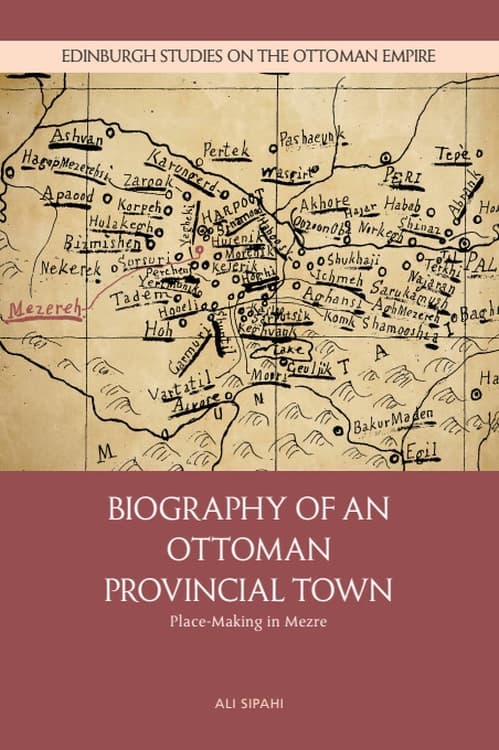
- Biography of an Ottoman Provincial Town, Ebook (EPUB), £85.00
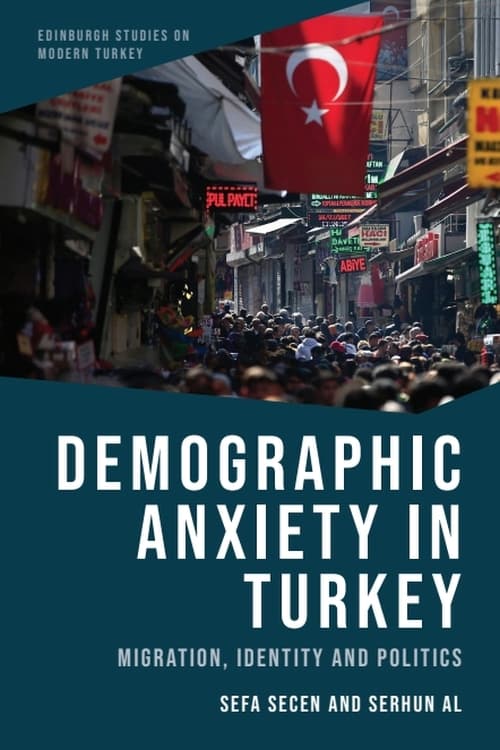
- Demographic Anxiety in Turkey, Ebook (EPUB), £90.00
More in IMES
View allEbook (EPUB)£90.00
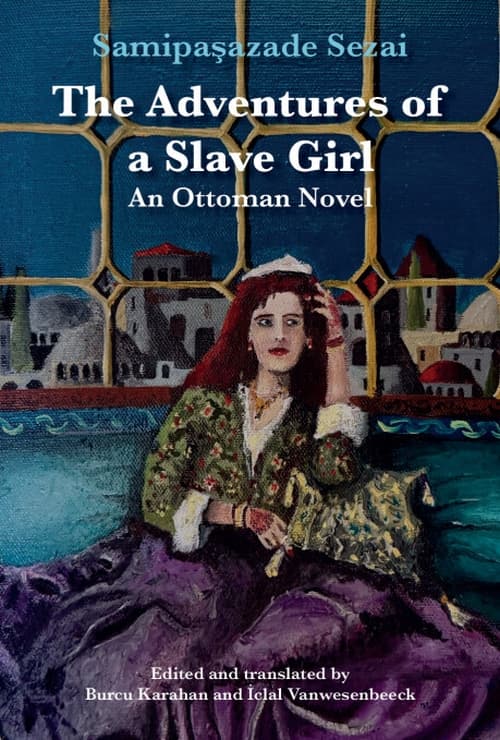
Ebook (EPUB)£14.99
Ebook (EPUB)£100.00
Ebook (EPUB)£95.00