Ebook (EPUB)£100.00
Art & Visual CultureTechnicities
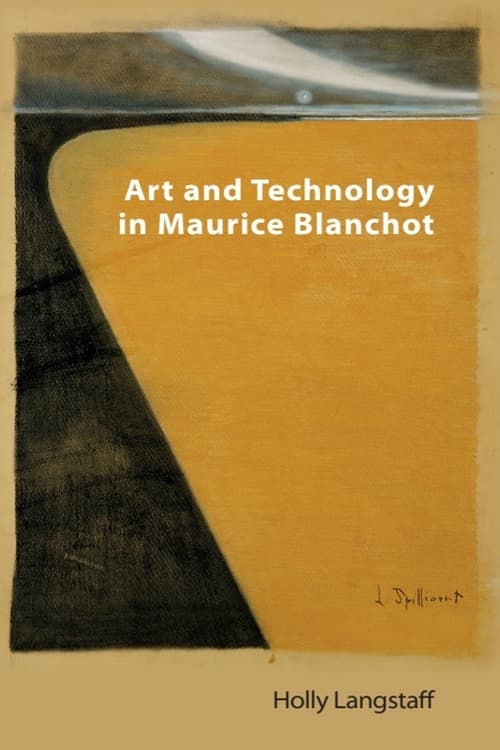
Art and Technology in Maurice Blanchot
Open access
Open access under CC-BY-NC-ND 4.0
Description
Demonstrates Blanchot's ongoing importance for contemporary philosophical debate about technology, the post-human, and ecological thinking
- Demonstrates a considerable shift in Blanchot's thinking from 1940s to 1980s
- Highlights the significance of Blanchot for important figures of twentieth-century French thought such as Jacques Derrida, Michel Foucault, and Bernard Stiegler
- Argues for the continued relevance of Blanchot to twenty first-century debates in literary theory and criticism
Holly Langstaff reappraises the influential French thinker Maurice Blanchot's writing from the 1940s to his late work in the 1980s, demonstrating how Blanchot's exploration of the question of technology remains decisive throughout his career.
She situates Blanchot's fictional and critical work in the context of his thinking of art as techne - as it develops out of Martin Heidegger's philosophy. While Blanchot follows Heidegger in the view that writing is a form of techne, he never appeals for salvation from the menace of technology in the modern era. Rather, he sees in all forms of technology the opportunity for a new way of thinking beyond value. This, Blanchot calls an entirely different sort of affirmation.
Contents
AcknowledgementsAbbreviationsIntroduction
‘One of the most difficult but important tasks of our time’TechnologyPolitics
1. Blanchot and Mallarmé: ‘The double state of the word’
‘The double state of the word’Literary AutonomyFoundation and SuspensionLiterature as Deception‘But when is there literature?’
2. An Inhuman Interruption
The History of Being‘Why Poets?’Death: The Impossibility of PossibilityA TurningAnimals and Automation
3. Technology and the Neuter
La TechniqueWriting as techne and Modern TechnologyThe Neuter: Kafka and The Last Man
4. Inorganic Writing
Fragmentary Writing and TechnologyNature Gone HaywireConclusionBibliography
Author
Reviews
Langstaff offers a full reappraisal of Blanchot’s writing and his profound critical engagement with Martin Heidegger, specifically around the question of technology and its relation to art. She admirably and persuasively demonstrates that Blanchot’s engagement with technology is decisive throughout his career and fundamentally related to his understanding of literature.
Maurice Blanchot is well-known for his principled refusal of mastery, power, and technique; until now, however, he has not been well-known for thinking of writing as "disobedient technology." Holly Langstaff's argument, along with her subtle readings of Blanchot's texts, and her awareness of the cultural politics of teknē, give us a new and unexpected perspective on this increasingly inescapable author.
Goes well with this book
From the same series or subject.
From the same series
More in Technicities
Ebook (EPUB)£19.99
Ebook (EPUB)£24.99
Ebook (EPUB)£24.99
Ebook (EPUB)£24.99
Ebook (EPUB)£20.99
Ebook (EPUB)£22.99
Ebook (EPUB)£22.99
Ebook (EPUB)£25.99

Ebook (EPUB)£25.99
Ebook (EPUB)£23.99

Ebook (EPUB)£31.00
More in Art & Visual Culture
View all
Ebook (EPUB)£24.99

Ebook (EPUB)£34.99
Ebook (EPUB)£175.00
Ebook (EPUB)£90.00