Ebook (EPUB)£85.00
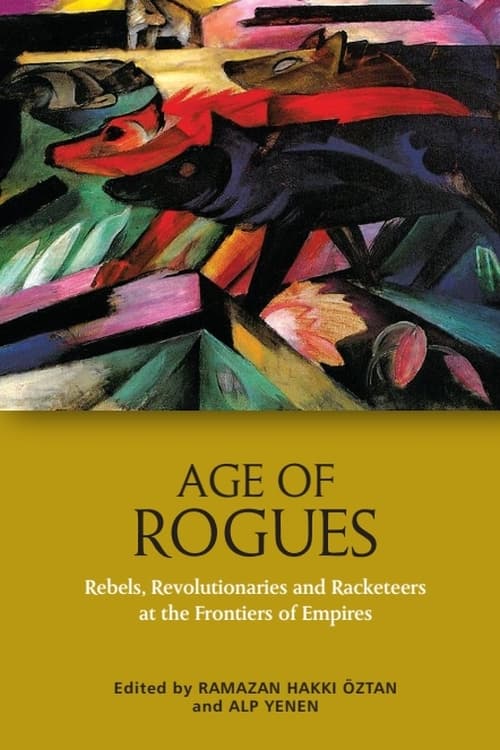
Age of Rogues
Rebels, Revolutionaries and Racketeers at the Frontiers of Empires
Open access
Open access under CC-BY-NC 4.0
Description
Studies the frontier cultures of revolution that shaped the making of the modern Middle East
- Uses a novel conceptual framework that charts the rise of transgressive politics in the frontiers of empires
- Includes a variety of biographical approaches to the key disruptive figures during the crisis of imperial and post-imperial regimes in the region
- Represents a connected geography of imperial collapse and nation-state formation in 12 case study chapters
- Engages with scholarship on intercommunal violence, revolutionary politics, and subaltern agency
In Age of Rogues, leading scholars engage with themes of historical and cultural legacies, contentious interactions within imperial regimes, and the biographical trajectory of men and women who challenged the political status quo of their time.
Rebels, revolutionaries and racketeers played central roles in the violent process of imperial disintegration as it unfolded in the frontiers of the Ottoman, Habsburg, Romanov and Qajar empires. This is a history of these transgressive actors from the late-19th century to the interwar years. This time was marked by similar, if not shared, revolutionary experiences and repertoires of contention across the connected geography of the Balkans, the Middle East and the Caucasus.
Contents
ForewordJack Goldstone
Part I: Rogues in History
1. Age of Rogues: Transgressive Politics at the Frontiers of the Ottoman EmpireAlp Yenen and Ramazan Hakkı Öztan
2. Gendered Narratives of Transgressive Politics: Recovering Revolutionary RubinaHouri Berberian
3. Caucasian Banditry in Late Imperial Russia: The Case of Abrek ZelimkhanJeronim Perović
4. Racketeers in Politics: Theoretical Reflections on Strong-Man Performances in Late Qajar IranOlmo Gölz
Part II: Rogues & Regimes
5. Conspiracy under Trial: Christian Brigands, Rebels and Activists in Bosnia during the TanzimatAnna Vakali
6. The Abode of Sedition: Resistance, Repression and Revolution in Sasun (1891–1904)Toygun Altıntaş
7. Conspiracy, International Police Cooperation and the Fight against Anarchism in the Late Ottoman Empire (1878–1908)İlkay Yılmaz
8. Between Ruler and Rogue: Sayyid Talib al-Naqib and the British in Early 20th Century BasraAline Schlaepfer
Part III: Rogue Trajectories
9. Chemistry of Revolution: Naum Tyufekchiev and the Networks of Revolutionary Violence in Late Ottoman EuropeRamazan Hakkı Öztan
10. Late-Ottoman 'Rogues' and their Paths to Power: A Prosopographic StudyBenjamin C. Fortna,
11. A Man of the Frontier: Ramadan Shallash and the Making the Post-Ottoman Arab EastMichael Provence
12. Borderline Rebels: The Khoybun League and the Alliance of Kurdish-Armenian Revolutionaries in the post-Ottoman Middle EastJordi Tejel
AfterwordErik Jan Zürcher
Authors
Reviews
In a stunning collection, the editors Öztan and Yenen not only expertly steer an otherwise disparate set of authors writing on seemingly very different themes, historic trajectories, and locales, they also masterfully conjoin this volume to serve as one of our generation’s best exemplars of scholarship on the late Ottoman Empire. A highly readable collection of cutting-edge research on agents of change along the fringes of both the Ottoman and larger modern world, this book must be considered an addition to the library of all serious scholars, and a candidate for their graduate seminars. I most enthusiastically recommend this invaluable new addition to the scholarship.
This fascinating volume brings together a wide range of case studies of ground-level political violence in the frontier zones of the Balkans, the Caucasus, and the Middle East in an era of imperial disintegration. The collection’s detailed exploration of the multifarious figures – brought together here under the label of ‘rogues’ – engaged in an often-violent politics of transgression offers a new and compelling case for the importance of apparently marginal actors, acting outside the state, to the process of imperial disintegration. Further, it traces how such ‘rogues’ gradually made their way into the structures of nationalism emerging before and after the First World War and eventually came to constitute central figures in institutions of postwar governance, installing their often-anarchic sense of political strategy into structures of statehood and nationalism from Macedonia to Iran. In its timely analysis of the politics of transgression, then, this volume is a crucial addition not just to the conversation about how these empires disintegrated but also to the analysis of the fractured and violent nation-states that replaced them.
Age of Rogues is a rich and original work dedicated to one of the most compelling issues within late imperial history: how did outlaws and rebels reflect and influence the development of modern states and society? Through a rich of array of case studies spanning the Caucasus, Balkans and Middle East, this volume offers important insights into how would-be revolutionaries and common brigands helped shape the nature of borders, governments, and provincial communities between the nineteenth and twentieth centuries. Each chapter of this work exemplifies the most current research into the global and local factors that gave birth to this period of violence and upheaval. As a study dedicated to a bottom-up understanding of the late Ottoman and Russian empires, Age of Rogues clearly sets new benchmarks for students and scholars alike.
Ramazan Hakkı Öztan and Alp Yenen have assembled a wonderful gallery of rebels, revolutionaries and racketeers—extraordinary characters located at the margins of imperial power. The stories presented here, of colourful personalities operating in dramatic contexts, make fascinating reading while the scholarship is of the highest quality. A fine book.
Goes well with this book
From the same series or subject.
More in IMES
View allEbook (EPUB)£90.00
Ebook (EPUB)£14.99
Ebook (EPUB)£100.00
Ebook (EPUB)£95.00