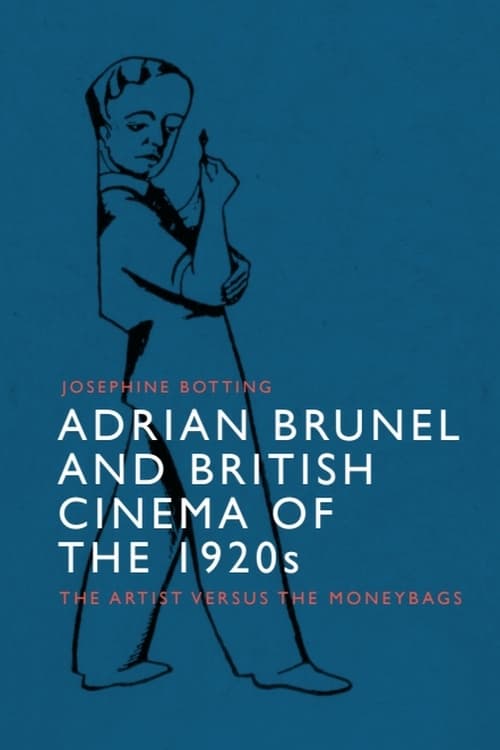
Adrian Brunel and British Cinema of the 1920s
The Artist versus the Moneybags

Our ebooks are read in the Academic Reader app. After you buy, we’ll email you how to open your ebook in it.
Description
- Offers an account of British film history through the prism of a unique creative voice within it
- Examines history through the interaction between archival research and textual analysis
- Explores the issues that beset British cinema in the late silent period, many of which pertained over subsequent decades
British cinema has been in the shadow of Hollywood for over a hundred years, constantly attempting to define itself in an effort to challenge its dominance. During the 1920s, a small group of intellectuals argued that injecting a level of ‘art’ into the medium was the way to do this, a view strongly opposed by the industry’s commercial forces.
Using the experiences of Adrian Brunel, Josephine Botting demonstrates how this clash affected the careers of filmmakers attempting to prove their theory. Brunel was cultured yet financially insecure, caught between the creative Bohemianism of 1920s London and a conventional, conservative film industry.
Tracing the ups and downs of Brunel’s biography with detailed reference to his personal papers, Adrian Brunel and British Cinema of the 1920s exposes the various forces controlling the production, distribution and exhibition of films in Britain as Brunel tried to negotiate them and find a niche in the insecure and competitive arena of British film.
Contents
List of FiguresAcknowledgementsList of Abbreviations
Introduction: ‘Might repay serious excavation…’: Adrian Brunel as a subject for study
1. Contextualised Biography of Adrian Brunel, Part I
2. A Syndicate of Beggars: Minerva Films Ltd and independent short film production
3. Art, the Trade and The Man Without Desire
4. Making Dull Films Jolly: Brunel’s burlesques
5. ‘A war film with a difference’: Blighty and Brunel’s negotiation of the British studio system
6. Adaptation and Screen Censorship: The Vortex
7. Adaptation and the Power of the Author: The Constant Nymph
8. Contextualised Biography of Adrian Brunel, Part II
Conclusion: Brunel’s Legacy
Bibliography
Author
Reviews
An outstandingly authoritative and important contribution to the literature on British film history
Botting’s meticulous and comprehensive documentation of these and Brunel’s other major endeavors brilliantly interweaves detailed accounts of the personal and institutional interactions involved in all stages of filmmaking; Brunel’s own accounts of his intentions and not-infrequent humiliations; and detailed close readings of the films, with analysis of the social engagement, themes, and especially the formal qualities the filmmaker innovated. Her book provides an invaluable account of an important yet underrecognized filmmaker’s career and an exemplary analysis of the ways in which a film is both enabled and circumscribed by the mode of its production.
A welcome addition to the growing scholarship on late silent British cinema. Josephine Botting's meticulous archival research and expert synthesis of sources does full justice to Adrian Brunel’s career. Botting challenges received wisdoms about this period of British cinema and demonstrates how Brunel navigated a shifting industrial and economic landscape.
Until the 1990s most British silent films were ignored as valueless. What a waste! Josephine Botting draws on the extraordinary archive of Adrian Brunel to revel in the richness of 1920s film culture – a hotbed of experimentation – and shines a light on Brunel's films to uncover a lost world.
Goes well with this book
From the same series or subject.
- Adrian Brunel and British Cinema of the 1920s, Ebook (EPUB), £20.99
- Adapting American Adulthood, Ebook (EPUB), £90.00
- Isabelle Adjani, Ebook (PDF), £19.99
More in Film Studies
View all
Ebook (EPUB)£90.00
Ebook (PDF)£19.99
Ebook (EPUB)£95.00
£24.99