Ebook (EPUB)£85.00
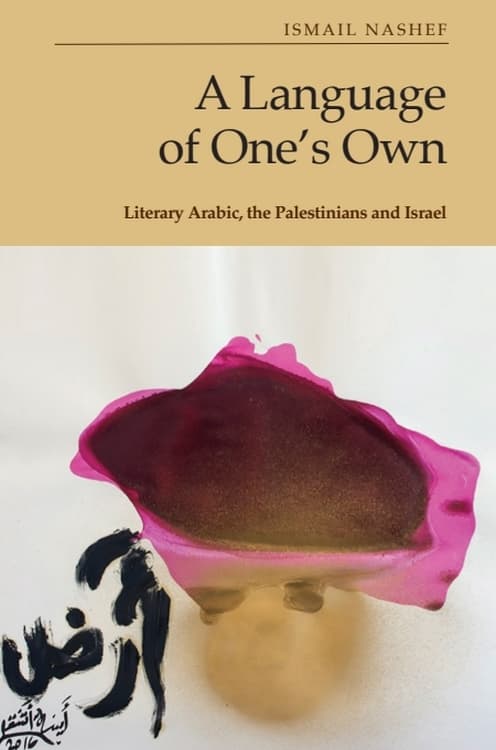
A Language of One’s Own
Literary Arabic, the Palestinians and Israel

Our ebooks are read in the Academic Reader app. After you buy, we’ll email you how to open your ebook in it.
Description
Demystifies the roles of literature and literary practices in the Palestinian national movement since 1948
- Offers a fresh case study of literary colonial contexts, in which language, literature, and socio-political regime are re-examined based on new data
- Opens a new tradition of addressing literary criticism as part of the Palestinian literary field by incorporating economic, social, and institutional factors in the analyses of literary Arabic
- Provides new and genuine insights regarding the literary settler colonial context in Palestine, and demystifies many of the accepted notions regarding the roles of literature and literary practices in the Palestinian national movement.
- Unlocks the umbilical relation between the language and the nation in the Palestinian and Israeli contexts, and frees literature and literary practices from the preordained roles derivative from the national ideologies of both Palestinians and Israelis.
- Argues that reading and writing practices are a form of social and political agency in themselves
- Demystifies many of the accepted notions regarding the roles of literature and literary practices in the Palestinian national movement
Following the establishment of Israel in 1948, literary Arabic became one of the main representatives of Palestinian national identity within Israel, and therefore a contested public site. Various state agencies and Palestinian groups were active in this public site, calling for certain ways of reading and writing in Arabic. These ways influenced the processes of reshaping the Palestinian national identity that were ignited by the war of 1948. Addressing the Palestinian reading public in Israel, both state agencies and Palestinian groups used literary criticism, as well as other genres, to promote and inculcate their preferred ways of reading and writing.
Ismail Nashef argues that since 1948 there have been three distinct modes for addressing the Palestinian reading public through literary Arabic: the public intellectual mode, the academic mode and the professional expert mode. Based on rich literary, historical and legal data, the book offers a fresh case study of literary settler colonial contexts, in which language, literature and socio-political regime are re-examined based on new data. It demonstrates the impossibility of rebuilding Palestinian national identities within the Zionist regime, highlighting the literary embodiment of the ongoing settler colonial condition of Palestinians in Israel.
Contents
Introduction
Chapter One: On Compulsiveness and Excessiveness: ‘Arabic’
Chapter Two: The Constitution of ‘Arabic’: Structural Beginnings and a Chain of Literary Events
Chapter Three: The Mediation Position in ‘Arabic’: The Colonial Mimetic Mask
Chapter Four: The Procedure Liberated: ‘Arabic’ in the Hands of Palestinian Experts
The Conclusion: The Narrative of the History of the Non-Historical
References
Author
Reviews
This book is the missing chapter in the history of Arabic in the modern Age, providing a unique theoretical and sociolinguistic framework for the development of the language under occupation.
Goes well with this book
From the same series or subject.
- A Language of One’s Own, Ebook (EPUB), £19.99
- Biography of an Ottoman Provincial Town, Ebook (EPUB), £85.00
- Demographic Anxiety in Turkey, Ebook (EPUB), £90.00
More in IMES
View allEbook (EPUB)£90.00
Ebook (EPUB)£14.99
Ebook (EPUB)£100.00
Ebook (EPUB)£95.00